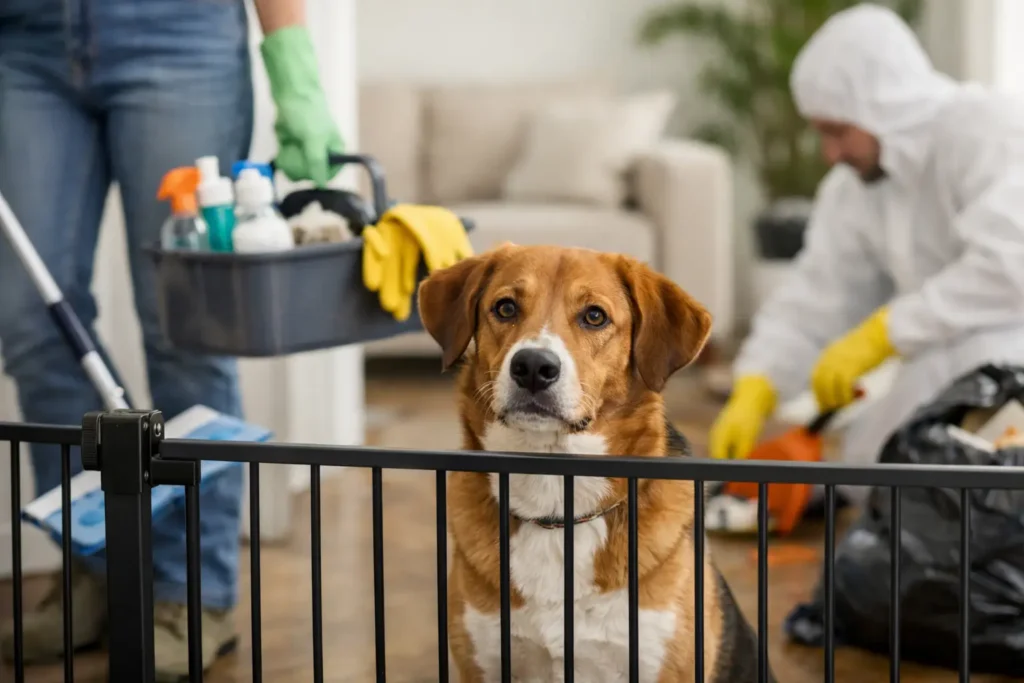
A clean yard should be a place where your dog can run, sniff, and relax – not a place where they can get into a cleaning product, step in fresh disinfectant, or slip past an open gate. Knowing how to keep dogs safe during cleanup starts with a simple rule: manage your dog before you start managing the mess.
Whether you are picking up pet waste after a long Black Hills winter, washing a patio, or having a professional scoop service visit, a few practical precautions make cleanup safer for everyone. The goal is not to make your routine complicated. It is to create a predictable process that keeps your dog secure, protects their paws and stomach, and leaves your property cleaner.
Start by Securing Your Dog
The safest place for a dog during most outdoor cleanup is inside the home, in a crate they already enjoy, or in a separate secure area of the yard. This prevents common problems: a curious dog investigating waste bags, bumping into tools, licking treated grass, or slipping through a gate that is temporarily open for access.
If your dog stays outside while you clean, use a leash or place them in a fully separate fenced section. Do not rely on verbal commands alone, especially if your dog gets excited around visitors, squirrels, delivery trucks, or another dog walking by. Even well-trained dogs can make a quick decision when something interesting is happening.
Before opening a gate, check that your dog is safely contained. This matters even more in neighborhoods near busier roads or open spaces. A cleanup visit should never create an opportunity for an unexpected escape.
Give Your Dog Something Else to Do
A food puzzle, chew, or quiet indoor nap can make cleanup time easier for dogs that feel anxious when routines change. If your dog reacts to vacuums, hoses, bags, or unfamiliar people in the yard, keeping them separated is kinder than asking them to tolerate a stressful situation.
For dogs with a history of guarding toys, food, or outdoor areas, separation is also a safety measure for the person doing the cleanup. Clear space and predictable boundaries help everyone have a better experience.
Pick Up Pet Waste Before Washing or Treating the Area
Dog waste should be removed before mowing, rinsing, deodorizing, or applying a yard-safe disinfectant. Leaving waste in place and spraying around it can spread contamination across patios, shoes, mower wheels, or areas where your family walks.
Use gloves, a dedicated scoop, and sturdy waste bags. Double-bagging helps control odor and reduces the risk of leaks before the waste goes into the trash receptacle. Once the job is done, wash your hands thoroughly, even if you wore gloves.
Regular pickup is more than an appearance issue. Pet waste can carry parasites and bacteria, and dogs may investigate or eat waste left in the yard. The longer it sits, the more likely it is to get tracked through the grass, mud, or snowmelt. Weekly service is a good fit for many households, while homes with several dogs or heavy yard use may benefit from more frequent visits.
Use Cleaning Products With Dogs in Mind
Not every product labeled as a cleaner belongs in a dog-friendly space. Bleach, strong acids, ammonia-based products, concentrated degreasers, and some fragranced cleaners can irritate paws, skin, eyes, or airways. A dog may also lick a damp patio, chew a bottle left within reach, or walk through a product and later groom it off their paws.
Read the product label before using it outdoors or on any surface your dog touches. Follow the dilution directions exactly. More product does not mean a cleaner or safer yard. It can leave behind unnecessary residue and make rinsing more difficult.
When disinfecting is needed, choose a product intended for pet areas and use it according to the label. Keep dogs away for the full stated contact time, then rinse if the instructions call for rinsing. Let surfaces dry completely before allowing your dog back outside.
This is especially important for decks, concrete, artificial turf, kennel runs, and shaded areas that stay damp. A surface can look dry around the edges while cleaner remains pooled in low spots.
Store Supplies Like a Curious Dog Will Find Them
Most accidental exposures happen after cleanup, not during it. Put bottles, sprays, gloves, bags, and tools away as soon as you finish. Store chemicals in their original containers, with labels intact, in a closed cabinet or garage area your dog cannot access.
Never transfer cleaners into a food container, drink bottle, or unmarked spray bottle. If something spills, keep your dog out of the area until it is fully cleaned and dry. If your dog gets cleaner in their eyes, on their skin, or in their mouth, contact your veterinarian or a pet poison resource right away and keep the product container available.
Protect Paws During Yard Cleanup
Paws are often the first point of contact with a freshly cleaned area. Look for hazards before letting your dog back out: sharp sticks, broken plastic, loose staples, thorny weeds, ice melt, standing water, and small pieces of damaged toys can all cause trouble.
In the Black Hills, seasonal conditions add a few extra concerns. Spring thaw can reveal waste and debris that were hidden under snow. Summer heat can make patios and dark surfaces hot enough to hurt paw pads. In fall, yard work may leave piles of branches, mushrooms, or lawn treatment residue. Winter brings traction products that can irritate paws or be harmful if licked.
A quick walk-through after cleanup is worth the minute it takes. Check the yard at your dog’s eye level when possible. If there is a puddle of cleaner, a dropped bag, or a damaged section of fence, your dog will probably find it before you do.
Keep Gates, Tools, and Service Visits Predictable
Professional pet waste cleanup can be a major relief, particularly for busy families, older adults, and homeowners who have difficulty bending or walking the yard. But a safe service visit depends on a clear plan for your dog.
Let your provider know if your dog will be in the yard, if there are gate instructions, or if your dog is nervous around strangers. Then keep the dog indoors or securely separated during the visit. A dependable company should respect your property, close the gate when finished, and communicate that service is complete.
At Black Hills Scoop Squad, service notifications and a closed-gate photo are designed to give customers that added peace of mind. It is a small detail, but it helps you know when the yard is ready for your dog again.
Tools should also be handled carefully at home. Keep rakes, trimmers, mower cords, and sharp-edged equipment out of reach. Turn off equipment before walking away, even briefly. Dogs can become tangled in cords, startled by sudden noise, or injured by a tool left where they can investigate it.
Know When Cleanup Can Wait
Sometimes the safest choice is to delay the job. Wait if lightning is nearby, winds are strong enough to blow bags and debris around, or your dog is already stressed by fireworks, construction, or visitors. If your dog has an open wound, skin condition, or recent surgery, ask your veterinarian whether they should avoid disinfected surfaces or muddy areas until healed.
There is also a practical trade-off with lawn and pest treatments. If you are applying a product, follow its re-entry instructions rather than guessing based on how dry the grass looks. If you are unsure whether a product is appropriate around pets, choose a different option or get guidance before applying it.
Make Safe Cleanup a Routine
Dogs do best when they know what to expect. Bring them inside, clean the area, store supplies, check the gate, and then let them back out when surfaces are dry and the yard is clear. The same routine works whether you are handling a quick daily pickup or scheduling recurring pet waste removal.
A cleaner yard gives your dog more room to enjoy being a dog. With a secure gate, safe products, and a few minutes of planning, cleanup becomes one less thing standing between your family and time outside together.