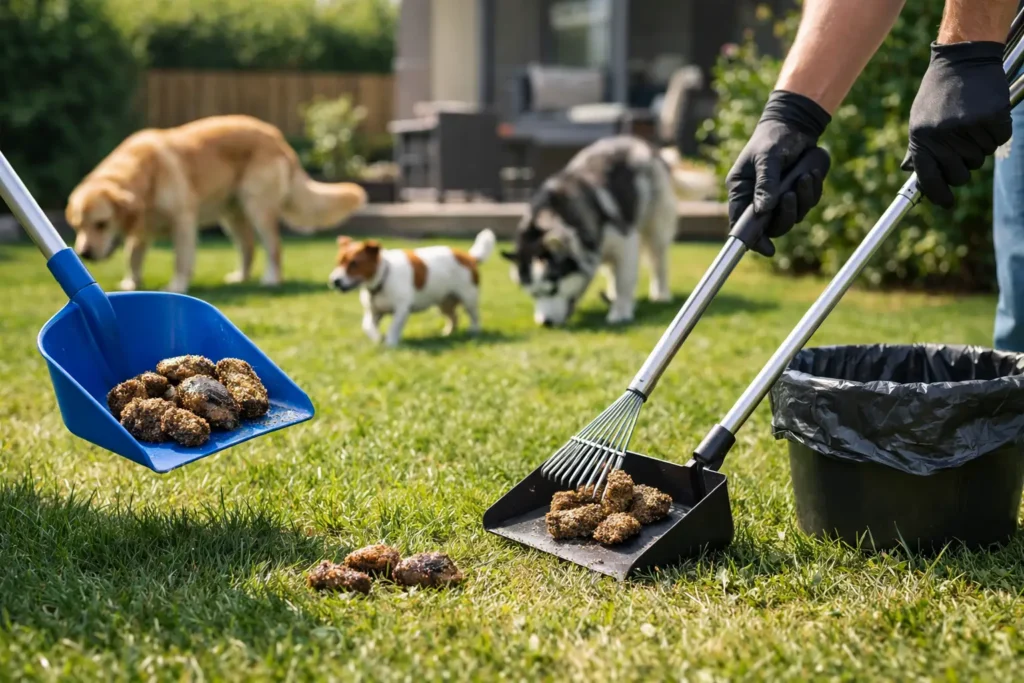
A yard can go from “we’ll get to it this weekend” to hard to use surprisingly fast, especially with two or more dogs. Multiple dog poop removal is not just about making the lawn look better. It is about keeping the space cleaner for kids, guests, and pets while taking one more unpleasant recurring chore off your list.
For many Black Hills households, the problem is not a lack of care. It is the math. More dogs mean more waste, more odor, more chances to step in something on the way to the grill or garden, and less time to stay ahead of it. A dependable cleanup routine makes a noticeable difference.
Why Multiple Dog Poop Removal Needs a Routine
One dog can create more waste than most homeowners expect. Add a second or third dog, and missed pickups compound quickly. Waste gets hidden in grass, pushed into snow, spread around after rain, or tracked closer to doors and patios by excited paws.
Leaving it behind also changes how your yard feels. Families stop using a section of the lawn. Pet owners avoid playing fetch because they are watching every step. A simple backyard gathering can start with an awkward cleanup sprint. Regular removal keeps your outdoor space ready when you want to use it, not only after a chore day.
There is a sanitation reason to stay consistent, too. Dog waste may contain parasites and bacteria that can be carried through the yard or onto shoes and paws. Prompt removal helps reduce exposure, particularly in homes with young children, older adults, or dogs that spend a lot of time outside. It does not replace normal handwashing or veterinary care, but it is a practical part of a cleaner property.
How Often Should a Multi-Dog Yard Be Scooped?
The right schedule depends on your dog count, yard size, weather, and how your family uses the space. A large yard with two dogs may be manageable with a less frequent visit if the dogs use one designated area. A smaller fenced yard with three dogs can need attention much more often because waste accumulates in the places everyone walks.
For most households with multiple dogs, weekly service is the best starting point. It prevents the buildup from becoming overwhelming and keeps the yard consistently usable. Twice-monthly service can work for lower-traffic yards or homes where owners pick up between visits. Monthly service is usually better for light maintenance than for a busy multi-dog household.
Winter deserves its own consideration in the Black Hills. Frozen waste can be easy to overlook beneath fresh snow, then show up all at once during a thaw. Regular visits help keep spring cleanup from becoming a much bigger job. If weather conditions prevent a complete scoop on a particular day, a professional service should communicate clearly and return as soon as conditions allow.
Signs You Need More Frequent Service
You may need to move from twice monthly to weekly cleanup if you notice odor near the patio, regularly find waste after you thought the yard was clean, or avoid letting the kids and dogs play in certain areas. Another sign is time. If your weekend cleanup keeps getting postponed because life is full, a more frequent schedule is often the easier and more reliable choice.
The goal is not perfection for its own sake. The goal is a yard that feels comfortable to walk through, play in, and enjoy without a cleanup task waiting in the background.
What Professional Multiple Dog Poop Removal Looks Like
A quality service should make this simple for the homeowner. You should not need to be home for every visit, coordinate a lengthy appointment window, or wonder whether your gate was latched when the technician left.
At Black Hills Scoop Squad, the process is built around those practical details. Clients receive a text alert before service and another notification when the cleanup is complete. Technicians thoroughly inspect the accessible yard, remove the waste, double-bag it, and place it in the customer’s trash receptacle. A closed-gate photo provides an extra layer of reassurance for homes with dogs.
That process matters even more in a multi-dog household. A quick glance from the gate may miss piles along fence lines, behind sheds, near decks, or in the favorite corners each dog has claimed. Thorough service means walking the property carefully instead of treating the visit like a fast pass through the middle of the lawn.
Professional teams should also arrive with clean equipment and follow pet-safe sanitation practices. Kennel-grade disinfectant protocols help reduce the chance of transferring contaminants from one property to another. This is an operational detail many homeowners never have to think about, which is exactly the point. The service should protect your pets and respect your property without adding work to your day.
Preparing Your Yard for a Better Cleanup Visit
Most properties need very little preparation. The biggest help is providing safe access to the areas where your dogs use the bathroom. Keep the gate unlocked on service day, secure dogs indoors or in a separate area, and let the provider know about any special instructions, such as a sticky latch, a second gate, or a section of the yard that is off limits.
Clear communication is especially helpful if your dogs are protective of the yard or nervous around unfamiliar people. A professional scooping team should never take chances with pet safety. If a dog is outside and cannot be safely secured, the technician may need to skip the visit or return later. That can be frustrating, but it is better than risking a dog, technician, or homeowner being injured.
It also helps to keep the yard reasonably accessible. Tall grass, heavy leaf cover, deep snow, and stored items can make waste harder to locate. Technicians can still do a great deal in those conditions, but visibility affects how complete any cleanup can be. If you know there is a heavily used area under leaves or near a shed, mention it.
One-Time Cleanup vs. Recurring Service
A one-time cleanup is a smart reset when the yard has gotten away from you. Maybe you are hosting visitors, moving into a home, coming out of winter, recovering from an injury, or simply tired of looking at the buildup. A thorough initial cleanup gives you back a usable starting point.
Recurring service is the better fit when the issue is ongoing. Multiple dogs produce a steady stream of waste, and the task does not stay finished for long. Weekly, twice-monthly, or monthly visits turn cleanup into a predictable household service rather than a chore that competes with your evenings and weekends.
There is a trade-off. One-time service solves today’s mess, but it does not prevent next week’s. A recurring plan costs more over time than doing nothing, but it gives back time, reduces stress, and helps maintain a cleaner yard all season. With no-contract flexibility, homeowners can choose a schedule that fits their household and adjust if their needs change.
Common Questions About Multiple Dog Poop Removal
Can a service clean a yard with several dogs?
Yes. Multi-dog properties are a common reason homeowners hire a poop removal service. The number of dogs helps determine the best visit frequency, but the cleanup process is designed for yards with ongoing waste buildup.
Where does the dog waste go?
For residential service, collected waste is typically double-bagged and placed in the customer’s own trash receptacle. That keeps disposal straightforward and avoids leaving bags behind on the property.
Do I need to be home?
Usually, no. As long as the technician has safe access and dogs are secured, cleanup can happen while you are at work, running errands, or relaxing inside. Service notifications and a gate photo help you know the visit was completed.
What if my gate is locked or my dog is outside?
The technician cannot safely enter a locked yard or work around an unsecured dog. Make access arrangements before the visit, and contact the company if something changes. Clear communication is the fastest way to avoid a missed service.
A clean yard should not require giving up your Saturday morning or putting off outdoor time until “after we scoop.” With the right schedule and a team you can trust, your dogs can enjoy their space and your family can enjoy it right behind them.