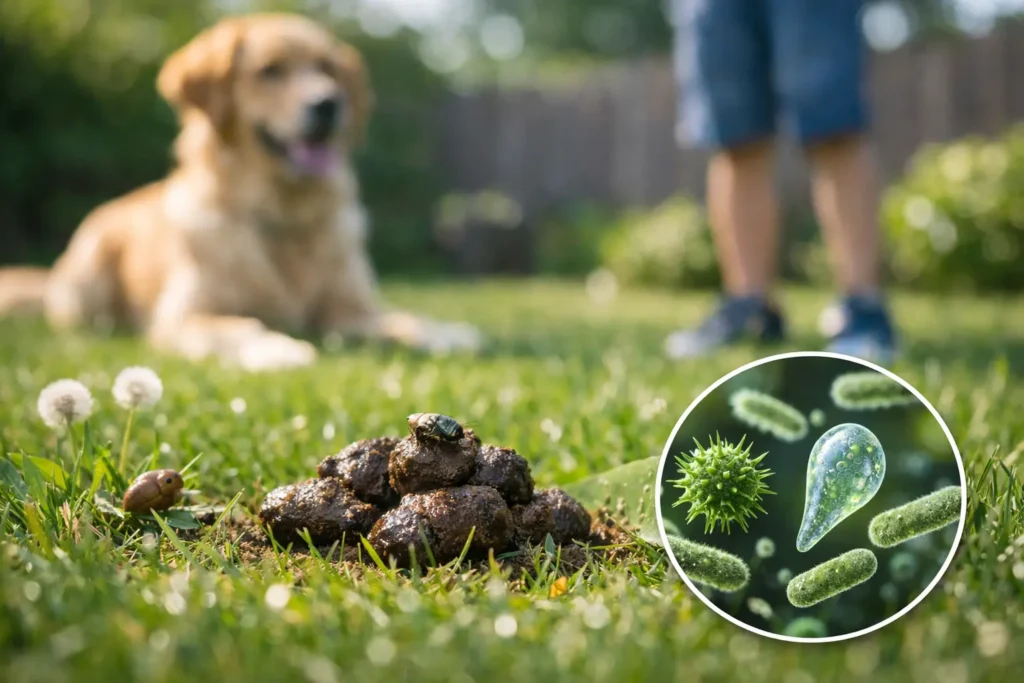
Step outside after the snow melts or a rainy week, and the problem gets obvious fast. Dog waste health risks in the yard are not just about a bad smell or an unpleasant chore. Left behind too long, pet waste can affect how safe your yard feels for kids, how healthy it is for dogs, and how comfortable it is to spend time outside at all.
A lot of homeowners assume one or two missed pickups are no big deal. In reality, waste builds up quickly, especially with multiple dogs or a busy schedule. What starts as a nuisance can turn into a sanitation issue that spreads across the lawn, onto shoes, and back into the house.
Why dog waste health risks in the yard are easy to underestimate
Dog poop does not behave like fertilizer, and that is one of the most common misunderstandings homeowners have. Cow manure gets mentioned all the time in gardening conversations, so people assume dog waste must break down the same way. It does not.
Dogs eat a high-protein diet, and their waste tends to be acidic and concentrated. That means it can damage grass instead of helping it grow. More importantly, it can carry bacteria and parasites that you do not want sitting where your family walks, your kids play, or your dog rolls around.
The risk level depends on a few things. A single dog in a large yard is different from three dogs in a smaller space. A yard that gets cleaned every few days is different from one that gets ignored for weeks. Weather matters too. Rain can spread residue through the soil and across hard surfaces, while hot weather makes odors stronger and the whole space less usable.
What can be in dog waste
Even healthy-looking dogs can produce waste that contains harmful organisms. Some of the better-known concerns include bacteria such as E. coli and salmonella, along with parasites like roundworms, hookworms, and giardia. Not every pile contains every problem, of course, but the point is that waste is never something to treat like harmless debris.
Roundworms are a big reason cleanup matters. Their eggs can survive in the environment longer than many people realize. If contaminated soil ends up on hands, shoes, toys, or paws, it creates an easy path for exposure. Hookworms can also be a concern, especially in areas where dogs or people spend time barefoot on the lawn.
That does not mean every yard with a dog becomes dangerous overnight. It does mean regular removal matters more than many people think. The longer waste sits, the more chances there are for contamination to spread.
The biggest health concerns for families
For most homeowners, the real issue is not one dramatic event. It is repeated exposure. A child touches the grass, then grabs a snack. A dog steps in old waste and tracks it onto the patio. Someone wheels a stroller through the yard without realizing what is in the turf.
Young children are especially vulnerable because they play low to the ground and are not always careful about hand washing. If your yard is where your family spends time in warm weather, cleanliness is not just cosmetic. It is part of keeping the space usable and low-stress.
Older adults and anyone with a weakened immune system may also have a harder time with exposure to bacteria or parasites. For households with mobility limitations, cleanup can be physically difficult, which often means waste sits longer than intended. That is where a simple recurring service can make a real difference in day-to-day peace of mind.
Dog waste health risks yard conditions can create for pets
Dogs are not protected from their own mess just because it came from another dog in the house. They can sniff, lick, step in, or roll through contaminated areas. Puppies are especially curious, and that curiosity is not always helpful.
If your dog uses the same sections of the yard over and over, missed waste can make those spots less sanitary with each passing day. Paws carry residue back inside. Some dogs will avoid dirty areas, while others seem drawn to them. Either way, a dirty lawn makes it harder to give your pet a clean place to play and potty.
There is also a quality-of-life issue here. A yard covered in waste is a yard people use less. Dogs get shorter play sessions, families skip backyard time, and the whole space becomes something to work around instead of enjoy.
What happens to your lawn when waste is left behind
Dead patches are only part of the story. Dog waste can discolor grass, create uneven growth, and leave behind residue that does not disappear just because the visible pile eventually breaks down. In wetter conditions, the mess can smear into the lawn rather than fully decompose in a clean way.
That matters if you care about curb appeal, but it also matters if you simply want a yard that feels normal to walk through. Once waste gets spread by mowing, foot traffic, or rain, cleanup becomes less straightforward. You may not see every source of contamination, but you will notice the results in odor, appearance, and how the yard feels underfoot.
For homeowners who invest in landscaping, regular waste removal protects more than grass. It helps keep patios, walkways, and outdoor living areas cleaner too.
Why odor is more than an annoyance
Bad smell is usually the first sign that cleanup has fallen behind. That smell is not just unpleasant for your family. It can affect how comfortable neighbors feel nearby and how confident you feel having guests over.
Odor also tells you that waste is accumulating faster than it is being removed. In warmer months, that buildup can make the yard feel closed off, even when the weather is perfect. If you avoid opening windows, grilling outside, or letting kids run around because of the smell, the problem has already gone beyond appearance.
A clean yard changes that quickly. When waste is removed consistently, the space becomes easier to use the way it was meant to be used.
How often should dog waste be picked up?
The honest answer is that it depends on the number of dogs, the size of the yard, and how much daily use the space gets. But for most households, waiting too long is where trouble starts.
If you have one dog and stay on top of things, a few times a week may be enough. If you have multiple dogs, weekly service is often the more realistic way to keep the yard consistently sanitary. Monthly cleanup can help in lighter-use situations, but it is usually more about catching up than maintaining a truly clean lawn.
That is why many busy homeowners prefer a recurring schedule. It removes the guesswork. Instead of noticing the problem only when it gets bad, the yard stays under control all month.
The practical fix: consistent removal and basic sanitation
The best response to dog waste health risks in the yard is not complicated. Remove waste regularly, dispose of it properly, and avoid letting it build up. If you handle cleanup yourself, wash hands thoroughly afterward and keep shoes, tools, and kids’ play items away from contaminated areas.
For many households, though, the challenge is not knowing what to do. It is finding the time and energy to keep doing it. Busy workweeks, travel, bad weather, physical limitations, and plain old procrastination all turn a simple task into a recurring headache.
That is where professional poop removal fits naturally. A dependable service keeps the yard cleaner without adding another item to your weekend list. It also helps when the company takes hygiene seriously, uses disinfecting protocols, communicates clearly, and treats your property with care. That kind of consistency matters because sanitation is not a one-time event.
At Black Hills Scoop Squad, that is exactly the point. Homeowners across the Black Hills want a yard that feels clean, usable, and taken care of without having to think about it every week.
When a clean yard becomes a quality-of-life upgrade
Most people start thinking about poop cleanup because they are tired of dealing with it. Then they realize the real benefit is bigger than convenience. The kids can run outside without you scanning the lawn first. The dog has a cleaner space to play. You are not embarrassed when friends stop by. You can actually enjoy your yard again.
That is the part people often miss when they think about dog waste. Yes, it is gross. Yes, it smells bad. But the real issue is that it quietly reduces how healthy and usable your outdoor space feels over time.
If your yard has started feeling like one more chore instead of part of your home, regular cleanup is a simple fix with a noticeable payoff. A cleaner lawn means fewer worries, less mess coming indoors, and more reasons to use the space you already have.