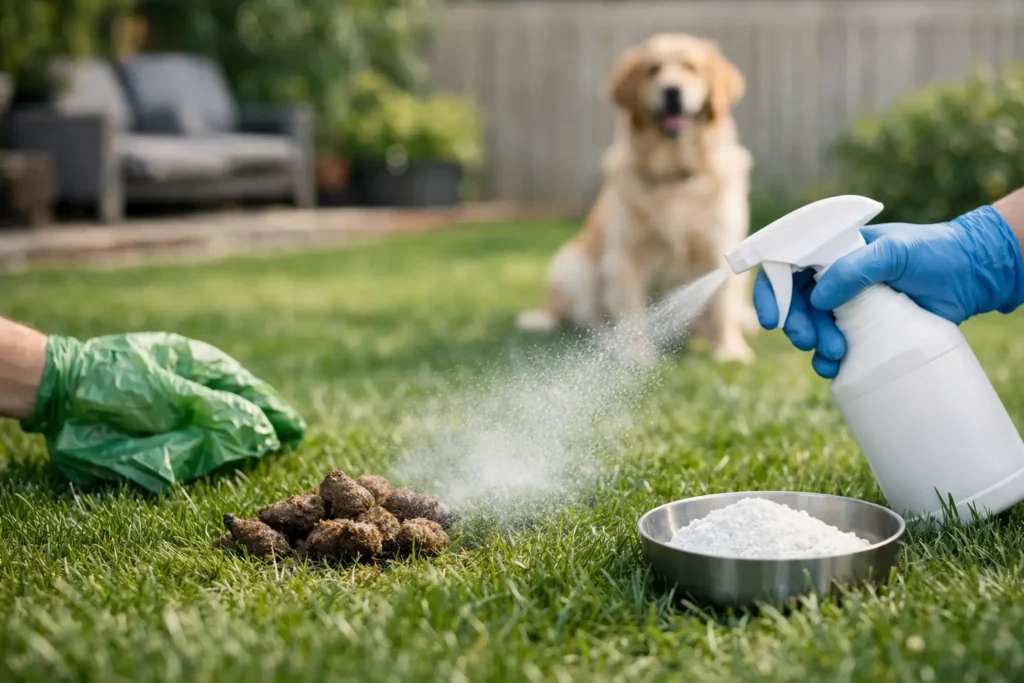
You usually notice it right after the snow melts, after a stretch of rain, or the minute friends come over and step into the backyard. Yard deodorizing after dog poop is not really about covering up a smell. It is about removing the source, treating the affected areas, and getting your yard back to a place where your family and dogs actually want to spend time.
The good news is that bad yard odor is fixable. The less fun news is that air fresheners, random sprays, and a quick hose-down rarely solve it for long. If your yard still smells even after you pick up waste, there is usually a reason.
Why dog poop smell lingers in a yard
Dog waste does not just sit on top of the grass. It breaks down into the soil, sticks to blades of grass, and can seep into bare patches, gravel, artificial turf, and low spots where water collects. If cleanup has been inconsistent, even for a couple of weeks, odor builds fast.
Urine can make the problem worse. A lot of homeowners think they are dealing with poop odor alone, but what they are really smelling is a mix of waste, urine concentration, moisture, and bacteria. Warm days bring it out. Humid weather holds it in the air. Snowmelt can suddenly release weeks of trapped odor at once.
That is why deodorizing works best when it starts with sanitation, not fragrance. If waste is still present, any deodorizer is just competing with the source.
The first step in yard deodorizing after dog poop
Before you treat anything, do a thorough cleanup. That means more than picking up what is easy to see from the patio. Walk the full yard in a pattern and check around fence lines, corners, under decks, near gates, and any place your dog tends to return to.
If the waste has been sitting for a while, some spots may smear or break apart as you remove it. In those cases, get as much solid material as possible first. Then lightly rinse the area to dilute residue without flooding it. Too much water can push organic matter deeper into the soil, especially in worn patches with poor drainage.
For many homeowners, this is the point where the job stops being quick. A one-time deep cleanup can make a huge difference, but only if it is actually complete. Missed piles are often the reason people say deodorizing products do not work.
What actually helps remove odor
Once the waste is gone, the right treatment depends on the surface. Grass, soil, gravel, and artificial turf all hold odor differently.
On natural grass, an enzyme-based outdoor odor treatment is usually the best place to start. These products are designed to break down the organic residue causing the smell instead of masking it. A pet-safe yard deodorizer can help after cleanup, especially in repeat-use bathroom areas where odor keeps coming back.
For bare soil, odor can hang on longer because there is less grass to absorb and disperse moisture. These spots often need repeated treatment and better rinsing over time. If the soil stays soggy, the smell may return no matter what product you use.
Gravel and rock areas can be stubborn because waste particles settle between stones. A surface rinse helps, but many gravel dog runs need enzyme treatment plus agitation with a rake or stiff outdoor broom to loosen trapped residue.
Artificial turf requires the most deliberate approach. Solid waste has to be fully removed, then the turf should be rinsed and treated with a product made for synthetic surfaces. If drainage under the turf is poor, odors can keep rising from underneath.
Common mistakes that make yard odor worse
The biggest mistake is trying to cover the smell with scented products. If a spray smells like lemons for ten minutes and then like lemons mixed with dog waste, the problem is still there.
The second mistake is waiting too long between cleanups. A backyard with one dog can get out of hand quickly. With two or three dogs, even a small delay can create buildup that is much harder to reverse.
Another issue is overwatering. People often assume more water equals less smell. Sometimes it does help, especially right after cleanup. But soaking the same area over and over can create a damp, bacteria-friendly spot that smells worse in warm weather.
Using harsh chemicals is also risky. Bleach, ammonia-based cleaners, and strong disinfectants are not a good choice for open yard areas where dogs walk, sniff, and lie down. Some can damage grass. Others can irritate paws, noses, or skin. Pet-safe matters here.
How to deodorize a yard without damaging grass
If you are dealing with a smelly lawn, go in this order: remove waste thoroughly, rinse lightly, apply a pet-safe enzyme treatment, and let the area dry. If odor is concentrated in one section, focus there first instead of spraying the whole yard with a general product.
It also helps to improve airflow and drainage. Trim overgrown grass, clear out debris, and watch for low areas where water pools. If one corner of the yard always smells worse, it may not just be the dog traffic. It may be a drainage problem.
Some homeowners like natural solutions such as diluted vinegar, but that approach has trade-offs. Vinegar can help with some surface odor, but it is not always the best option for repeated use on grass, and it does not break down organic waste the way enzyme treatments do. Baking soda is another common suggestion, but outdoors it tends to be less effective unless the source of the odor has already been removed.
When the smell keeps coming back
If you clean the yard, apply treatment, and still notice odor a few days later, there are usually three likely causes. The first is missed waste. The second is soaked-in residue in high-use potty areas. The third is that your cleanup schedule is not frequent enough for the number of dogs using the yard.
This is especially common for busy families and working homeowners who mean to stay on top of it but end up playing catch-up every weekend. By then, the smell has already built up. The same goes for older adults or anyone with mobility limits. A task that sounds small on paper becomes a repetitive, unpleasant job that is easy to postpone.
That is where routine service makes a real difference. Consistent removal keeps odor from building in the first place, which is always easier than trying to fix a yard that has been neglected for weeks. If deodorizing is part of the plan, it works better because technicians are not starting from scratch every time.
A practical routine for yard deodorizing after dog poop
For most homes, the best routine is simple. Waste needs to be removed on a consistent schedule. Trouble spots should be rinsed as needed, not drenched daily. Pet-safe deodorizing treatments should be used where odor actually lingers, especially in favorite bathroom zones, near gates, or along fence lines.
Season matters too. Spring thaw often reveals buildup from winter. Summer heat amplifies odor fast. Fall leaves can hide waste and trap moisture underneath. In colder parts of the Black Hills, homeowners often discover that what looked manageable in winter becomes a bigger odor problem once temperatures rise.
If that cycle sounds familiar, it probably means the yard needs more than occasional attention. It needs a reliable system.
When professional help makes sense
There is nothing complicated about picking up dog waste. What is complicated is doing it consistently, completely, and in a way that keeps the yard sanitary and usable week after week. That is the value of a professional service. It saves time, yes, but it also helps prevent odor, mess, and the stress of realizing your yard has gotten away from you again.
A dependable poop removal service should do more than just scoop. Homeowners should know when service is happening, trust that gates are secured, and feel confident that tools and shoes are handled with sanitation in mind. Those details matter when someone is working around your pets and property.
For households that want a cleaner yard without the ongoing chore, Black Hills Scoop Squad is built around exactly that kind of consistency. Regular visits, safe handling practices, and a clean-yard routine can go a long way toward stopping odor before it takes over your outdoor space.
A fresh yard does not come from stronger fragrance. It comes from staying ahead of the waste, treating the real problem, and making cleanup one less thing you have to think about.