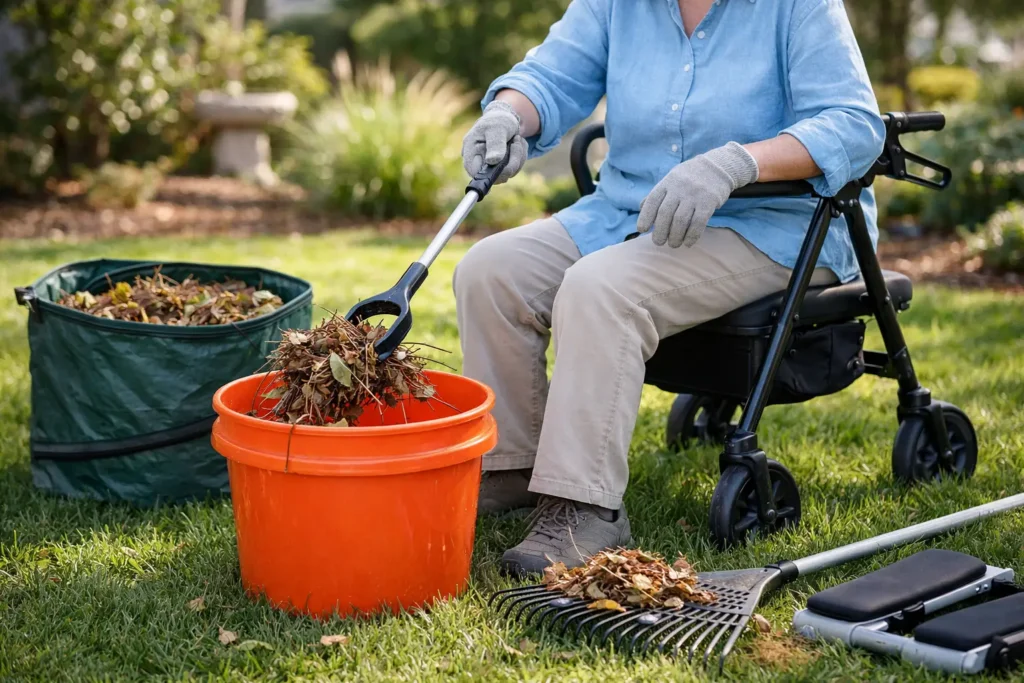
The hard part is not loving your dog. The hard part is looking out at the yard, knowing cleanup needs to happen, and also knowing bending, walking uneven ground, or carrying waste bags may not be realistic today. Yard cleanup for mobility limitations is not about doing less for your home. It is about finding a safer, easier way to keep your yard clean without adding pain, strain, or stress to your week.
For many dog owners, the challenge is not motivation. It is the physical demand of the job itself. Pet waste cleanup usually means repeated bending, twisting, reaching, and walking across grass, mud, snow, or sloped areas. If you use a cane, walker, wheelchair, or simply deal with balance issues, joint pain, or recovery from surgery, that routine can go from unpleasant to unsafe fast.
A clean yard still matters. It makes the space more usable, cuts down on odor, helps protect kids and pets, and keeps waste from getting tracked into the house. The goal is not perfection. The goal is a plan that works for your body and your household.
Why yard cleanup gets harder with mobility limits
Most people think of yard work as lifting or mowing, but dog waste removal brings its own set of physical demands. The movement is repetitive, low to the ground, and often done in small, awkward steps. That matters when your knees are stiff, your back is unreliable, or your footing is not what it used to be.
The yard itself can make things worse. A flat, dry lawn is one thing. A yard with hills, slick spots, loose gravel, or snowpack is another. Even a short walk to the far fence line can feel like too much when every step has to be careful.
There is also the hygiene side of it. Handling pet waste requires steady balance, hand control, and a system for bagging and disposal. If any part of that process feels unstable, many people put it off. Then one missed cleanup becomes several, and the job gets bigger and more frustrating.
A better approach to yard cleanup for mobility limitations
The best cleanup plan usually starts with one simple question: what part of this task is hardest on your body? For some people, it is bending. For others, it is walking the yard. For others, it is carrying full bags to the trash.
Once you know the sticking point, you can build around it. A long-handled scooping tool can reduce bending. Smaller, more frequent cleanups can reduce fatigue. Clearing only a limited section of the yard can make the task feel manageable if your dog tends to use the same area.
That said, tools only help if they truly fit your situation. A reach tool may solve the bending issue but not the balance issue. A wheeled cart may help with carrying but be awkward on uneven ground. There is no one-size-fits-all fix, which is why many homeowners do best with a mix of small adjustments and outside help.
Set up the yard to reduce strain
If you are trying to make cleanup easier, your yard setup matters more than most people realize. Dogs often develop preferred bathroom areas, and encouraging that habit can make cleanup more predictable. Some homeowners create a designated potty area close to the house, near a patio, or along a level path. That can reduce how much ground you need to cover and lower the risk of falls.
Clear walking paths are just as important. If the route to the cleanup area includes hoses, toys, uneven pavers, or clutter near a gate, every trip becomes more difficult. A cleaner path does not just make the task easier. It makes it safer.
Timing can help too. If mornings are better for your energy or balance, that may be the right time. If the yard is slick after rain or snow, waiting a bit may be the smarter choice. There is nothing lazy about choosing the safest window to do a physical chore.
When DIY cleanup stops being practical
There is a difference between a task being inconvenient and a task becoming a real burden. If cleanup leaves you sore for the rest of the day, makes you feel unsteady, or gets delayed week after week because it is too physically demanding, that is a sign the current plan is not working.
This is especially true for older adults, people recovering from injury, or anyone managing chronic pain. Dog ownership should bring companionship, not a recurring physical setback. If the yard is becoming a source of worry or embarrassment, it may be time to take the job off your plate.
Professional pet waste removal can be a practical solution, not a luxury. It removes one repetitive, unpleasant task that can be genuinely hard on the body. It also creates consistency, which is often the missing piece when cleanup depends on whether you feel well enough that day.
What to look for in a cleanup service
If you are considering help, reliability matters just as much as the cleanup itself. You want a service that shows up as scheduled, communicates clearly, and respects your property. For homeowners with mobility limitations, that peace of mind is a big part of the value.
Look for a company that offers recurring service options rather than only one-time visits. Weekly service is often the easiest way to keep a yard consistently usable, though twice-monthly or monthly service may work depending on the number of dogs and the size of the yard. The right frequency depends on your household, and there is no shame in choosing the level of support that keeps things manageable.
You should also pay attention to the details. How is the waste bagged and disposed of? Are technicians trained to close gates securely? Do you get service notifications so you know when the job is done? For many customers, these small operational details are what turn a basic cleanup into a dependable home service.
A good provider should make the process simple. Easy signup, predictable billing, and clear communication remove friction from the start. If making the yard easier to manage is the goal, the service itself should not create extra work.
Safety and sanitation matter more than people think
Pet waste is not just a visual issue. It affects how the yard smells, how comfortable it feels to use, and how clean your dog stays after being outside. If waste sits too long, it can get spread around by shoes, paws, lawn equipment, and weather.
For people with mobility limitations, sanitation matters even more because every extra cleanup task adds up. A mess that gets tracked indoors creates another job. A yard that smells unpleasant becomes a place you avoid. A routine service schedule helps prevent those issues before they build.
This is one reason many homeowners prefer a professional team with disinfecting protocols and a clear process. The value is not just removal. It is the confidence that the job is being handled carefully and consistently.
Getting help is a practical decision
A lot of people hesitate to hire this kind of service because they feel like they should be able to manage it themselves. But household tasks change as life changes. The right question is not whether you can push through it. The right question is whether it makes sense to keep pushing through it.
If dog waste cleanup is causing discomfort, taking too much time, or making your yard less enjoyable, getting help is a smart adjustment. It lets you keep the dog, the yard, and the routine you enjoy while removing one of the least pleasant parts of the job.
For homeowners across the Black Hills, that kind of support can make a real difference. A dependable service like Black Hills Scoop Squad can take over the recurring cleanup, so the yard stays cleaner and more usable without asking more from your body than it should.
The right solution depends on your day-to-day life
Some homeowners only need occasional help during winter, after surgery, or during a flare-up. Others want weekly service because they know the task is not going to get easier over time. Both choices are valid.
What matters most is matching the solution to your actual routine, not the routine you wish you had. If you need a designated potty area, a simpler path, and a recurring cleanup plan, that is a strong system. If you only need outside help during the hardest months, that can still make life much easier.
A clean yard should not come at the cost of pain, risk, or frustration. If the task has become physically difficult, there is nothing wrong with making it easier. Sometimes the best home-care decision is the one that gives you back a little comfort, a little safety, and one less thing to worry about this week.