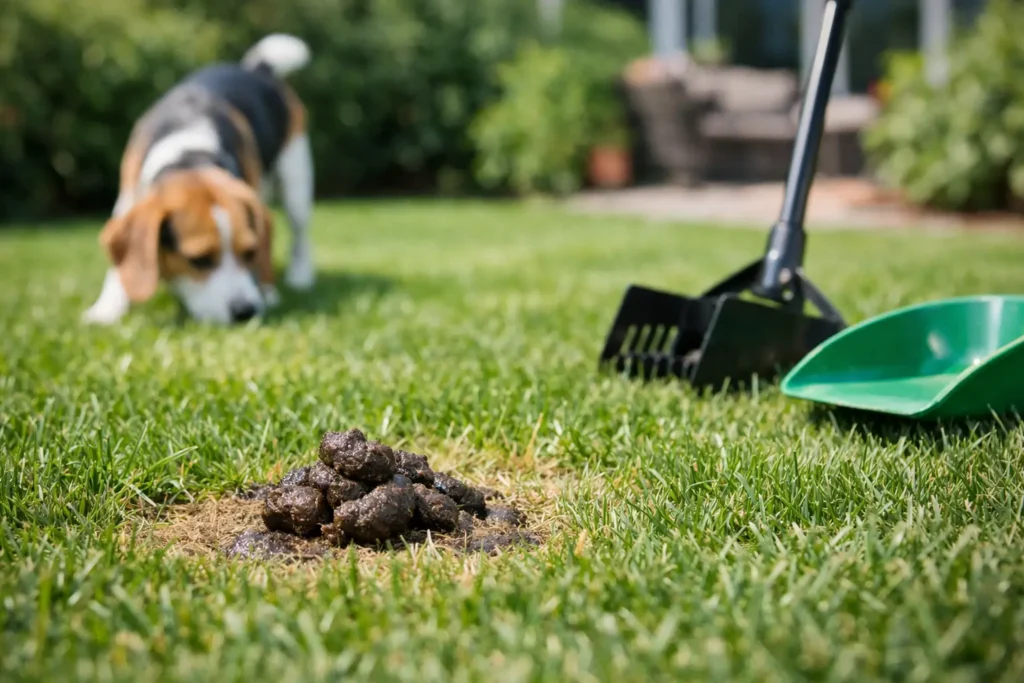
You notice it first as a bright yellow patch, then a thinning spot, then that part of the yard nobody really wants to step in anymore. If you’ve been asking, is pet waste bad for lawn health, the short answer is yes. Dog waste can damage grass, create odor, attract pests, and leave behind bacteria and parasites that make your yard less clean and less enjoyable.
That doesn’t mean one dog automatically ruins a lawn. It does mean pet waste needs to be handled consistently if you want your yard to stay usable, healthy, and safe for your family and pets.
Is pet waste bad for lawn or just unsightly?
A lot of homeowners assume dog poop is basically a natural fertilizer. That idea sounds reasonable until you see what happens in real yards. Unlike composted manure from plant-eating animals, dog waste is not something you want sitting on your grass.
Dogs eat protein-rich diets, and their waste breaks down very differently. As it sits, it can smother grass underneath, add harmful bacteria to the area, and create muddy or dead patches. If left too long, it also gets worked into the lawn by rain, foot traffic, mower wheels, and curious paws.
Urine is part of the problem too. Dog urine contains concentrated nitrogen, and while nitrogen can help a lawn in the right amount, too much in one spot burns grass. That is why many dog owners see circular yellow or brown areas with greener edges around them. The center gets overloaded, while the outer ring gets a lighter dose.
So yes, pet waste is more than a cosmetic issue. It affects the condition of your grass and the overall cleanliness of your property.
What dog poop actually does to grass and soil
When dog poop is left in the yard, it blocks sunlight and traps moisture against the grass. That alone can weaken the turf. Over time, the bigger issue is what happens as the waste starts breaking down.
The material does not disappear quickly or cleanly. It can leave residue in the soil, contribute to unpleasant odor, and create conditions that make your lawn feel less sanitary. In heavily used areas, especially where dogs tend to go in the same zone, the grass often thins out because it never gets a chance to recover.
Soil health can suffer too. A healthy lawn depends on balance – air, water, nutrients, and stable microbial activity. Repeated pet waste in the same area disrupts that balance. The ground can become compacted from repeated traffic, oversaturated with waste, and harder for grass to grow through evenly.
This is one reason lawns with dogs often develop a few chronic trouble spots near fences, patios, side yards, or the path to the gate.
Why dog waste is different from cow manure
This is where people get tripped up. Farm manure is often associated with fertilizing fields, so it is easy to assume dog poop works the same way. It doesn’t.
Cows and horses are herbivores, and their manure has very different properties. Dog waste carries a different bacterial load and comes from an animal with a much different diet. It is not lawn food. In a residential yard, it is simply waste that needs to be removed.
The health side matters too
For many homeowners, the lawn damage is annoying, but the sanitation concern is what really pushes the issue. Dog waste can contain bacteria and parasites that nobody wants tracked into the house.
That matters if you have kids playing in the yard, guests visiting, or dogs that roll around and re-enter the home. It also matters if you mow your lawn. Running a mower over hidden waste can spread it much farther than you think, including onto mower wheels, shoes, and nearby grass.
Even when the waste looks old or dried out, that does not mean the area is truly clean. Pet waste has a way of lingering in the environment longer than people expect.
Is pet waste bad for lawn if you pick it up eventually?
Eventually is better than never, but timing matters. The longer waste sits, the more opportunity it has to affect grass, sink into the ground, smell, and create a mess during rain or mowing.
If you stay on top of removal, your lawn has a much better chance of holding up. Weekly cleanup is often enough for many households, but that depends on how many dogs you have, the size of the yard, and whether your dog tends to use the same area every time.
A single dog in a large yard creates a different situation than three dogs in a smaller fenced space. That is where consistency beats occasional catch-up cleaning.
What about dog urine spots?
Dog urine is one of the most common reasons pet owners think their grass is dying. In reality, the grass is usually reacting to concentrated nitrogen and salts hitting one spot over and over.
Female dogs often get blamed more because they tend to squat in one area, but male dogs can cause damage too, especially if they revisit the same places. Some lawns are also more sensitive than others. Cool-season grasses common in South Dakota can show stress when exposed repeatedly.
You can sometimes reduce urine damage by encouraging your dog to use a less visible section of the yard or by watering the area soon after they go. That said, watering every bathroom break is not realistic for most busy homeowners. If the yard is already full of waste, adding inconsistent cleanup on top of urine spots only makes the lawn harder to maintain.
How often should pet waste be removed?
The practical answer is before it builds up.
For most homes, once a week keeps the yard in much better shape than letting waste pile up for two or three weeks. If you have multiple dogs, a smaller yard, or family members using the lawn every day, more frequent attention can make a noticeable difference.
Regular removal helps with more than appearance. It reduces odor, lowers the chance of stepping in waste, makes mowing easier, and gives grass a better shot at recovering between visits. It also keeps your outdoor space ready to use instead of turning cleanup into a bigger project every time you want to enjoy the yard.
This is exactly why recurring service works well for so many homeowners. It takes a repetitive, easy-to-avoid chore and turns it into one less thing to manage.
Signs pet waste is already affecting your yard
Sometimes the problem is obvious. Other times it shows up gradually. You may have a pet waste issue if your lawn has recurring yellow or brown patches, lingering odor after rain, thinning grass in favorite dog zones, or areas that feel unpleasant to walk through even when the yard looks mostly clean.
Another sign is avoidance. If your family uses the patio but not the lawn, or if you keep putting off mowing because the yard feels gross, pet waste is already shaping how you use your property.
That is not just a lawn-care issue. It is a quality-of-life issue.
The easiest way to protect your lawn
There is no complicated formula here. The best thing you can do is remove dog waste consistently and keep problem areas from getting overloaded.
That may mean creating a designated potty area, rinsing urine spots when possible, and staying on a predictable cleanup schedule. If your household is busy, if bending and lifting is difficult, or if the task simply keeps falling to the bottom of the list, professional cleanup can be the difference between a yard that stays manageable and one that keeps getting worse.
A dependable service should do more than just scoop. It should show up reliably, communicate clearly, handle disposal properly, and treat your property with care. For homeowners around the Black Hills, that peace of mind matters just as much as the cleanup itself.
Your yard should be a place where your dog can play and your family can relax without side-stepping mess, odor, or damaged grass. When pet waste is handled regularly, the lawn has a better chance to stay cleaner, healthier, and ready for everyday life.
If your yard has started feeling more stressful than usable, that is usually your sign that the problem is not the lawn. It is the routine, and routines are a lot easier to fix than grass.