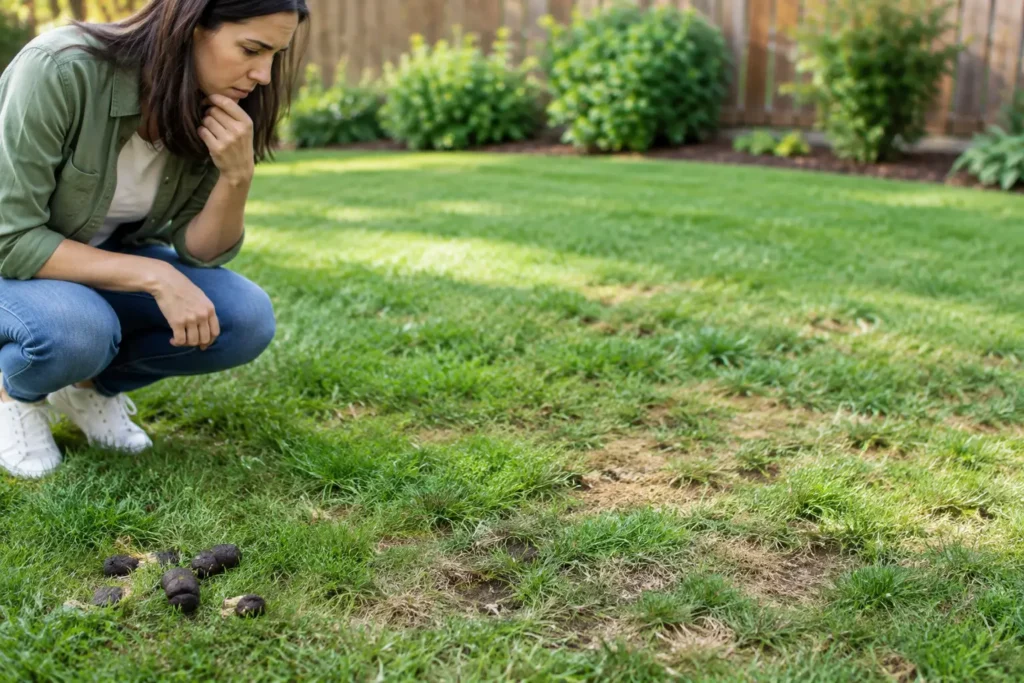
A yard can look green from the sidewalk and still be unpleasant – or unsafe – to use up close. The most common signs of unsanitary lawn conditions are easy to miss at first: a few piles left behind, a smell that appears after rain, or flies gathering around one section of grass. But when dog waste and other organic debris build up, your lawn stops being the comfortable outdoor space your family and pets deserve.
For busy dog owners, this is not about having a picture-perfect yard. It is about knowing when cleanup has become a health, comfort, and maintenance issue. Here are the signs to watch for and what you can do about them.
1. Dog waste is visible in more than one area
The clearest warning sign is also the easiest to put off. If you can spot several piles while looking across the yard, waste has likely been sitting long enough to become a sanitation concern. It is especially common during busy workweeks, bad weather, or winter months when snow covers what is underneath.
Dog waste is not a fertilizer, despite a common belief that it works like manure. It can carry bacteria and parasites, and it may leave brown or thin patches where it sits. When several piles are spread across a yard, every trip outside becomes a chance for shoes, paws, toys, and lawn equipment to come into contact with it.
A quick daily pickup works well for some households. For multi-dog homes or families with packed schedules, a recurring cleanup routine is usually more realistic.
2. The yard smells worse after rain or warm weather
A healthy lawn may smell earthy after a rainstorm. An unsanitary one has a sharper, sour, or distinctly waste-like odor, particularly near patios, decks, fence lines, and popular potty areas.
Moisture and warm temperatures make odors more noticeable because they speed up decomposition and keep contaminated material close to the surface. A yard may seem fine on a dry, windy day, then become hard to enjoy after an afternoon shower. If you avoid opening windows, sitting on the patio, or inviting people over because of the smell, cleanup is overdue.
Removing the waste is the first step. If odor remains in a frequently used pet area, the grass or hardscape may need appropriate pet-safe deodorizing and sanitation treatment. The right approach depends on the surface, season, and condition of the yard.
3. Flies, insects, or scavengers keep showing up
Flies do not need much encouragement. Dog waste, overflowing trash, standing water, and decaying organic material can all make a lawn more appealing to insects. If flies appear in unusual numbers around the yard or gather near waste piles, they are telling you there is something to clean up.
You may also notice birds, rodents, or other scavengers investigating the same areas. Not every animal sighting means your property is dirty, especially in the Black Hills where wildlife is part of life. The concern is repeated activity around pet waste or trash areas.
Prompt removal reduces the food source and makes the yard less inviting. Keeping garbage lids closed and picking up fallen fruit, food scraps, and pet waste also helps prevent one small sanitation problem from becoming a pest problem.
4. Grass has brown spots or thin, damaged patches
Brown grass can come from many causes: drought, lawn disease, pet urine, insects, compacted soil, or a lawn care issue. But concentrated dog waste is one possible contributor, especially when brown patches appear where your dog regularly goes.
Feces can smother grass and create uneven areas that are harder to mow or enjoy. It can also make cleanup more difficult because older waste gets pressed into the turf. In colder months, the problem may stay hidden under snow and become obvious only during the spring thaw.
Do not assume every patch is caused by your dog. If lawn damage is widespread, a local lawn professional may help identify the cause. Still, regular waste removal eliminates one preventable source of stress on your grass.
5. Shoes, paws, and toys come back inside dirty
If your child steps outside for five minutes and needs a shoe inspection afterward, the yard is not functioning as a clean living space. The same goes for dogs tracking residue in on their paws or bringing outdoor toys inside after they have rolled through an unscooped area.
This is one of the most practical signs of an unsanitary lawn because it affects your daily routine immediately. You may find yourself wiping paws at the door, avoiding certain parts of the yard, or telling the kids not to play on the grass. That is a frustrating trade-off when you have a yard specifically to give your family and dog room to enjoy.
A consistently scooped lawn lets you use the space with less second-guessing. It will not eliminate all dirt – this is South Dakota, after all – but it removes a problem nobody wants carried onto the carpet.
6. Waste is collecting along fences and in hard-to-see corners
Dogs often choose predictable bathroom spots. Many prefer fence lines, the far edge of the yard, behind sheds, or areas near shrubs where people are less likely to notice the mess. These are the places that can become unsanitary even when the visible center of the lawn looks fairly clean.
Walk your property from more than one angle. Check behind patio furniture, along gates, near dog runs, and under trees. Pay close attention after snow melts, since weeks of hidden waste can appear all at once.
These areas benefit from a systematic cleanup rather than a quick scan. A professional service should cover the full yard, not just the places that are easiest to reach, while respecting landscaping, gates, and your pet’s routine.
7. You are avoiding your own outdoor space
This sign is less visible but just as real. Maybe you keep the kids on the deck instead of letting them play in the grass. Maybe you put off backyard barbecues, or you feel embarrassed when a neighbor sees the yard. Perhaps picking up after the dog has become a physical challenge due to mobility limits, injury, or simply a demanding schedule.
When yard cleanup is always hanging over your weekend, it is no longer a minor chore. A clean outdoor area supports more relaxed routines: letting the dog out before work, gardening, playing catch, or sitting outside without watching every step.
There is no prize for handling every unpleasant household task yourself. A recurring service can be especially useful for households with multiple dogs, large yards, limited mobility, or little free time.
8. Cleanup has become occasional instead of routine
Most unsanitary yards do not get that way overnight. They get there through small delays: one missed pickup, then a busy week, then bad weather, then a growing pile that feels too unpleasant to tackle. If you are cleaning only when company is coming or when the odor becomes noticeable, your schedule is probably not frequent enough for your household.
The right frequency depends on the number of dogs, yard size, and how often children and pets use the lawn. A single dog in a large yard may be manageable with regular at-home pickup. Two or three dogs in a smaller space can need attention much more often. Weekly service works well for many homes, while some families prefer twice-monthly or monthly visits based on their routine and budget.
How to Restore a Cleaner, More Usable Yard
Start by removing all visible waste, including older piles near fence lines and under snow or leaves. Double-bag the waste before placing it in your trash receptacle, and wash hands and tools after cleanup. If you use a dedicated scoop or rake, store it away from children’s toys, gardening tools, and food-prep areas.
Then make maintenance simple enough to sustain. Pick a routine you can honestly keep, whether that means daily spot checks, a designated weekend cleanup, or scheduled service. For high-use pet areas, consider a pet-safe sanitation product used according to its label. Disinfecting is not a substitute for waste removal, but it can be a useful extra step where contamination and odor are ongoing concerns.
For homeowners who would rather take yard cleanup off the list entirely, Black Hills Scoop Squad provides recurring and one-time dog waste removal with service notifications and a closed-gate photo after each visit. The goal is straightforward: give you a cleaner lawn without making you spend your free time hunting for what your dog left behind.
A clean yard is not about perfection. It is about being able to open the back door, let your dog out, and enjoy your own space without wondering what is underfoot.