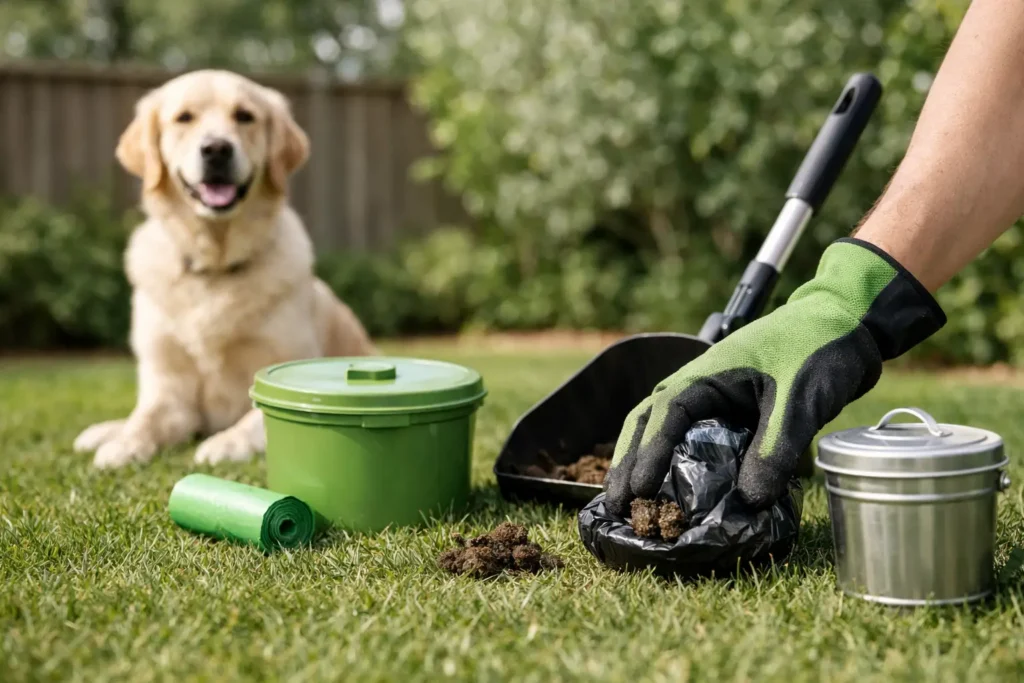
That moment when you spot one pile near the patio usually means there are three more hiding in the yard. If you have one dog, multiple dogs, kids who play outside, or a busy week ahead, figuring out how to manage dog waste routine can feel less like a small chore and more like a job that never really ends.
The good news is that this does not have to become a constant battle. Most homeowners do better when they stop treating poop pickup like a random task and start treating it like part of normal home upkeep, right alongside trash day, lawn care, and wiping muddy paws at the door. A simple routine keeps the yard cleaner, reduces odor, and makes the space feel usable again.
Why a dog waste routine matters more than most people think
Dog waste is not just an eyesore. Left in the yard, it creates odor, attracts flies, gets tracked onto shoes, and makes outdoor time less pleasant for everyone. That matters even more if children play in the grass, guests come over, or your dog tends to revisit the same parts of the yard.
There is also the sanitation side. A neglected yard can quickly become the kind of problem that feels embarrassing from the street and frustrating up close. Many homeowners put off cleanup because they are busy or because bending, walking the yard, and bagging waste is physically uncomfortable. Then a few missed days turns into a much bigger cleanup.
A steady routine prevents that buildup. It keeps the task smaller, faster, and easier to manage.
How to manage dog waste routine without overcomplicating it
The best routine is the one you will actually keep. For some households, that means a quick daily check. For others, it means a full-yard cleanup on set days each week. The right schedule depends on your dog count, yard size, weather, and how often the space gets used.
If you have one dog and a moderate yard, every two to three days may be enough. If you have two or more dogs, daily or every-other-day service usually feels much more manageable. In warmer months, more frequent pickup often makes the biggest difference because odor shows up faster and the yard gets more use.
Try tying cleanup to something already on your calendar. Some people do it after work on Mondays, Wednesdays, and Fridays. Others pair it with taking out the trash or mowing the lawn. The point is to remove the guesswork. Once the task has a set rhythm, it stops hanging over your head.
Pick a cleanup style that matches your household
There are two common approaches, and neither is right for everyone.
The first is spot cleaning as you go. If you are already outside with your dog, you pick up waste right away or at the end of the yard break. This works well for households with a fenced yard, a predictable dog schedule, and someone who is regularly available to stay on top of it.
The second is batch cleanup. Instead of stopping every time, you collect everything during a planned pass through the yard. This can be more realistic for busy families, working professionals, or older adults who want to avoid multiple trips outside each day.
The trade-off is simple. Spot cleaning keeps things consistently tidy, but it asks for more daily attention. Batch cleanup takes less mental energy during the week, but if you wait too long, the chore gets more unpleasant.
Set up the routine so it is easy to follow
A dog waste routine usually breaks down when supplies are inconvenient. If you have to hunt for bags, gloves, or a scooper every time, the task starts feeling bigger than it is.
Keep your tools in one place near the door you use most. For most homeowners, that means waste bags, a dedicated scooper or rake set, and hand sanitizer or easy access to a sink. If you use a small lidded container outside as a temporary holding spot, make sure it is sturdy, lined, and emptied regularly.
It also helps to decide in advance what counts as done. Maybe that means one full pass around the perimeter and favorite dog spots. Maybe it means clearing the whole yard before the weekend. Clear standards keep the job from turning into a half-finished chore.
Pay attention to the spots dogs use most
Most dogs are creatures of habit. They tend to return to the same corners, fence lines, or back sections of the yard. Once you notice your dog’s preferred areas, cleanup gets faster.
Start there on every pass. You can save time and avoid missing waste hidden in longer grass or along property edges. During snow season or after heavy rain, this matters even more because waste can blend into the yard and resurface later when the weather changes.
Make disposal part of the routine, not an afterthought
One reason people avoid this chore is that pickup is only half the task. Disposal can feel messy if you do not have a clear plan.
For many homeowners, the simplest option is to bag the waste securely and place it in the outdoor trash receptacle. Double-bagging often makes sense for odor control, especially in summer or if trash pickup is several days away. The key is consistency. If your disposal method is always the same, cleanup becomes more automatic.
Be realistic about what your household can tolerate. A small amount of waste in a sealed bag may not bother you. A week of accumulated bags sitting in heat probably will. If odor is already a frustration point, more frequent pickup is usually worth it.
Keep the yard usable, not just technically clean
A lot of people focus only on removal, but a good routine also protects how the yard feels. Even when visible waste is gone, odor and bacteria concerns can still make a space feel off.
That is why many homeowners also think about sanitation. High-traffic pet areas may need occasional deodorizing or pet-safe treatment, especially if you have a small yard or multiple dogs. This is not about making your lawn perfect. It is about keeping the outdoor space fresher and more comfortable for your family and pets.
If your dog has a favorite run path or bathroom zone, that area may need more attention than the rest of the yard. The right level of upkeep depends on use. A lightly used side yard has different needs than the main backyard where kids and dogs play every day.
When DIY stops being the easiest option
Some people assume they should handle dog waste cleanup themselves because it seems simple. And sometimes that is true. But simple does not always mean convenient.
If you are missing cleanups, dreading the task, dealing with mobility limits, or trying to keep up with multiple dogs, doing it yourself may no longer be the easiest or most reliable option. The routine only works if it actually happens.
That is where recurring service can make sense. A professional schedule removes the mental load and keeps your yard from slipping into catch-up mode. For busy households, that can be the real value. It is not just about avoiding a chore. It is about having a consistently clean yard without rearranging your week around it.
A service like Black Hills Scoop Squad is especially useful when peace of mind matters as much as cleanup. Homeowners often want to know the gate was secured, the visit happened as scheduled, and the waste was handled with care. Those details matter when you are trusting someone with your property and your pets.
A realistic schedule for different households
There is no single perfect answer, but there are patterns that work well.
A one-dog household with a larger yard may do fine with cleanup every few days. A family with two or three dogs, a smaller yard, and lots of outdoor activity usually benefits from at least weekly attention, and often more. Older adults and people with physical limitations often do best with a plan that removes bending, lifting, and repeated walking from the equation altogether.
If you keep falling behind, the answer is usually not better intentions. It is a simpler system or more support.
How to know your routine is working
You do not need a chart or a complicated checklist. You just need a few signs that the routine is doing its job.
The yard should be ready to use without a quick scan for hidden piles. Odor should stay under control most days. Cleanup should feel predictable instead of overwhelming. And most importantly, you should not be spending your weekends catching up on something that could have been handled steadily.
That is the real goal when you think about how to manage dog waste routine. Not perfection. Just a clean, usable yard and one less unpleasant task taking up space in your day.
If your current system leaves you behind more often than ahead, it may be time to make the job smaller, more regular, or completely hands-off. A good routine should make life easier the moment it becomes routine.