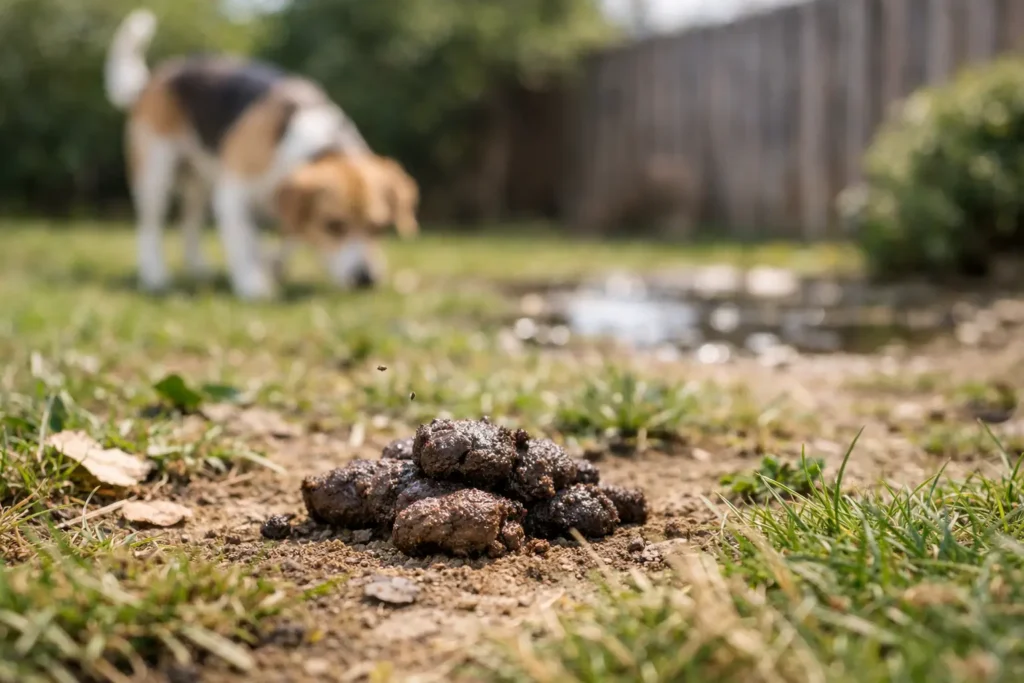
You usually notice it one of two ways – the smell hits first, or someone steps in it. If you have ever wondered what happens if dog poop stays outside, the short answer is this: it does not just “go away.” It sits in your yard, breaks down slowly, and can create problems for your grass, your pets, your family, and the overall cleanliness of your property.
For many homeowners, the issue is not knowing they should pick it up. It is keeping up with it when life gets busy, the weather turns bad, or the yard is bigger than expected. A missed day turns into a missed week, and before long the yard feels less usable than it should.
What happens if dog poop stays outside in your yard
Dog waste is often mistaken for fertilizer, but it is not the same as manure from plant-eating animals. Dogs eat high-protein diets, and their waste is more acidic and more concentrated. That means when poop stays on the lawn, it can burn grass instead of feeding it.
You may first see small yellow or brown spots where the waste sat too long. Over time, those patches can become larger dead areas, especially in warm weather or if the same parts of the yard get repeated use. If you are trying to keep a clean, green lawn, dog waste works against you.
There is also the practical side. A yard with old piles scattered around becomes harder to mow, harder to enjoy, and harder to let kids or pets use freely. Even if the waste has dried out or blended into the grass, it is still there. That means the problem is not gone – it is just less visible.
It can spread bacteria and parasites
One of the biggest concerns with leaving dog waste outside is sanitation. Dog poop can carry bacteria such as E. coli and salmonella, along with parasites like roundworms, hookworms, and giardia. Not every pile contains every risk, of course, but the longer waste sits in the yard, the more chances there are for contamination to spread.
This matters most in places where dogs play, children run barefoot, or people garden and spend time close to the ground. You do not have to touch the waste directly to be affected. Soil, shoes, paws, and even rainwater can move contaminated material around the property.
For households with puppies, senior dogs, or pets with sensitive immune systems, that risk can matter even more. Dogs sniff everything. They step through the yard and then lick their paws. A yard that looks mostly clean may still have enough lingering waste residue to create a hygiene problem.
Why old dog poop is not harmless
A common assumption is that once poop dries out, it is no longer a problem. Unfortunately, dry does not mean sanitary. Bacteria and parasite eggs can remain in the environment, especially in soil. Some parasites are stubborn and can persist longer than most homeowners expect.
That is why regular removal matters more than occasional cleanup. Waiting until the yard looks bad usually means the sanitation issue started well before then.
Rain does not wash it away the way people think
In the Black Hills, weather changes fast. Rain, snowmelt, and runoff can make outdoor messes feel temporary, but water often spreads the problem instead of solving it.
When dog waste sits outside and gets rained on, parts of it can break apart and move into the surrounding soil. In some cases, it can wash toward sidewalks, driveways, drainage areas, or lower parts of the yard. If you have a sloped property, the waste may travel farther than you realize.
That means the mess is no longer limited to one spot. It can affect a larger area and become harder to fully clean up later. Wet waste is also messier to remove, more likely to smear, and more likely to leave residue behind.
Winter does not solve it either
Snow can hide dog waste for weeks or months, which creates a different kind of headache. During winter, it is easy to postpone cleanup because the yard is frozen or covered. Then the thaw comes, and suddenly everything is visible at once.
Spring cleanup after a long winter can be overwhelming. What felt manageable one day at a time turns into a yard full of old waste, soggy ground, and stronger odors. If you have ever faced that first warm week of the season with a backyard full of surprises, you already know how fast it gets unpleasant.
It attracts pests and creates odor
Dog poop left outside can attract flies and other insects, especially in warmer months. The longer it sits, the more it becomes part of a cycle you do not want near your home. Pests are drawn to waste, and once they find a reliable source, they tend to stick around.
Odor is another issue people underestimate. One pile may not seem like much, but multiple piles over time change the way the whole yard smells. That affects more than your comfort. It can shape how often you use the yard, whether guests feel comfortable outside, and how enjoyable the space is for your family.
If you have a patio, grill area, or space where kids play, those smells travel. A clean yard feels more inviting. A neglected one tends to keep everyone indoors.
What happens if dog poop stays outside for weeks or months
The longer waste remains, the more layered the problem becomes. At first, it is just a chore you did not get to. After a few weeks, it becomes a lawn issue, a sanitation issue, and a quality-of-life issue.
Older waste is often harder to spot, especially in taller grass or areas along fences and edges. Some piles flatten into the ground. Others dry out and crumble. That makes complete cleanup more difficult because you are no longer removing one fresh pile at a time. You are dealing with buildup.
There is also the habit factor. When the yard already feels dirty, people tend to avoid it or put cleanup off longer. That creates a cycle where the yard becomes less usable and more intimidating to tackle. For busy families and working homeowners, that is usually the moment when the task shifts from annoying to unmanageable.
The impact on pets, kids, and everyday yard use
A backyard should be simple. Let the dog out. Let the kids run around. Walk to the grill without watching every step. Dog waste gets in the way of all of that.
For pets, a dirty yard can mean more exposure to waste, more dirty paws, and more chances of tracking bacteria back into the house. For children, it means less freedom to play comfortably and more risk in areas where they roll, crawl, or sit in the grass.
Even adults feel the impact. You mow differently. You avoid certain corners of the yard. You make mental notes to deal with it later. That background stress may seem minor, but it adds up, especially when it is tied to a recurring chore no one wants to do.
The best way to prevent the problem
The most effective solution is simple: remove waste consistently before it builds up. For some households, that means scooping daily or every few days. For others, a weekly routine is enough to keep the yard clean and manageable.
What matters is consistency. If you have one dog and a small yard, you may be able to stay ahead of it easily. If you have multiple dogs, a busy schedule, mobility limitations, or a larger property, it gets harder fast. That is where a professional service can make everyday life easier.
A recurring cleanup schedule keeps the lawn cleaner, reduces odor, lowers the chance of contamination buildup, and gives you a yard you can actually use. It also removes that nagging task from your list. For many homeowners, that peace of mind is just as valuable as the cleanup itself.
At Black Hills Scoop Squad, that is exactly the point – making it easy to keep your yard clean, safe, and ready for the people and pets who use it every day.
Dog ownership comes with enough responsibilities already. Your yard does not need to become one more source of stress when a simple, consistent cleanup routine can keep it in good shape year-round.