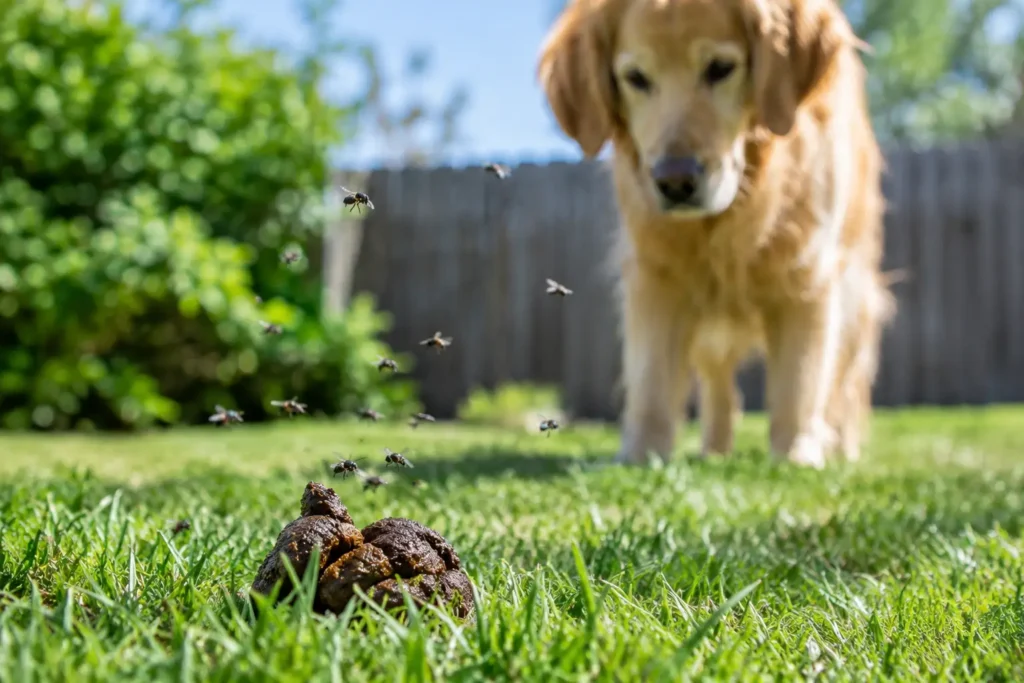
A few flies around the yard may not seem like much until they start hovering near the patio table, the kids’ play area, or your dog’s water bowl. Dog waste flies are a common warm-weather frustration for homeowners, especially when pet waste sits in the yard longer than it should. The good news is that flies are usually a manageable problem once you remove what is attracting them and keep the area consistently clean.
For busy dog owners, the issue is rarely that they do not care about the yard. It is that poop cleanup is easy to put off after a long workday, a rainy week, or a packed weekend. Unfortunately, a few missed pickups can add up quickly when temperatures rise.
Why Dog Waste Flies Gather in Your Yard
Flies are drawn to decaying organic material, moisture, and odors. Dog waste can provide all three, particularly when it is left outdoors in warm or humid conditions. Fresh waste attracts flies, and waste that has been sitting for several days can become even more appealing as it breaks down.
Not every fly you see in the yard necessarily came from dog waste. Flies may also be attracted to spilled birdseed, uncovered trash, compost, standing water, outdoor food, or a nearby livestock area. Still, pet waste is one of the most common and easiest-to-control sources in a dog-owning household.
Warm weather makes the problem more noticeable. Flies are generally more active in spring and summer, and their life cycle can move quickly when conditions are favorable. A yard with several dogs, frequent rain, shaded damp areas, or a missed cleanup schedule can become much more inviting than a regularly maintained yard.
Why one missed week can matter
A single pile in a large yard will not always create an obvious fly problem. But most yards have more than one pile, and the issue compounds when waste builds up over time. If your dog uses the same area of the lawn each day, those repeated deposits create a concentrated source of odor and organic material.
This is why occasional cleanup and consistent cleanup produce very different results. Picking up the yard once a month may improve its appearance, but weekly service is often more effective for households trying to reduce flies, odors, and unpleasant surprises underfoot.
Flies Are More Than a Backyard Nuisance
The most immediate concern is comfort. Flies buzzing around a grill, outdoor meal, or family gathering can make your own backyard feel less usable. They can also bother dogs that are trying to rest outside, especially around kennels, patios, and shaded areas where pets spend time.
There is a sanitation concern as well. Flies can land on waste and then move to other surfaces, including patio furniture, pet bowls, trash can lids, and food-prep areas. That does not mean every fly creates a health emergency, but it is a good reason to keep pet waste away from the places where your family and pets spend time.
Dog waste can also carry parasites and bacteria. The most practical response is not to panic over a fly or two. It is to reduce exposure by removing waste promptly, washing hands after yard work, keeping pet bowls clean, and discouraging flies from gathering in the first place.
How to Reduce Dog Waste Flies
The most effective solution is simple: remove dog waste on a dependable schedule. Fly sprays, scented candles, and backyard traps may provide limited help, but they do not solve the source of the problem. A clean yard gives flies fewer reasons to stay.
Pick up waste before it builds up
For one dog, cleaning the yard at least once a week is a practical baseline. Homes with multiple dogs may need pickups more often, especially during hot weather. If your dog has a favorite bathroom spot, check that area closely. Those concentrated zones are often where flies first become noticeable.
If daily cleanup is realistic for your household, it is an excellent option. If it is not, choosing a recurring professional cleanup schedule keeps the task from becoming another unfinished chore. The right frequency depends on the number of dogs, yard size, weather, and how often your family uses the outdoor space.
Keep waste bags and trash containers secure
Scooped waste should be bagged and placed in a covered trash receptacle. Loose bags left beside the garage, on the patio, or near a gate can still attract flies and create odor. Double-bagging helps contain waste, particularly during warmer months or when trash pickup is several days away.
Give your trash can lid a quick check, too. If the lid does not close fully or the container has residue around the rim, flies may continue to gather even after the lawn is clean. A rinse and occasional cleaning of the can can make a noticeable difference.
Eliminate other fly-friendly conditions
Once dog waste is under control, look around the rest of the property. Empty standing water from buckets, toys, and planters. Clean up dropped fruit, spilled birdseed, and outdoor pet food. Keep compost covered, and do not leave food scraps in open bins.
It also helps to keep dog bowls clean and refill water regularly. A shaded water bowl may be a favorite stop for flies, particularly if it sits near the area where your dog goes to the bathroom.
Use traps and treatments as a backup, not the main fix
Outdoor fly traps can reduce adult fly activity when placed away from patios, doors, and gathering spaces. Putting a trap too close to where you sit can bring more flies toward the area before it catches them. Follow the product instructions carefully and position traps downwind when possible.
Yard sprays may offer short-term relief, but they can affect beneficial insects and are not a substitute for cleanup. If you use a treatment, consider your dog’s safety, follow label directions, and allow treated areas to dry as instructed before pets return to the lawn.
When the Fly Problem May Be Coming From Somewhere Else
If you are cleaning up dog waste consistently and still see a large number of flies, it may be time to investigate other sources. Check trash containers, drains, compost, dead rodents, animal nesting areas, and any standing water. In rural or edge-of-town areas, nearby livestock, manure piles, or neighboring properties can also affect fly activity.
The type of fly can offer a clue, but homeowners do not need to become insect experts to take useful action. Small flies concentrated near drains may point to a plumbing or moisture issue. Large numbers of flies around outdoor garbage may indicate a bin that needs cleaning. If flies are suddenly appearing indoors, or if the number seems unusually high, a pest control professional can help identify the source.
A Cleaner Yard Is Easier to Enjoy
Regular pet waste removal does more than make a lawn look better before company arrives. It helps reduce odors, limits what attracts flies, keeps shoes and paws cleaner, and makes it easier to use the yard without scanning every step.
For homeowners who do not have time, who have mobility limitations, or who simply do not want to spend their weekend scooping, a recurring cleanup service can keep the problem from building up. Black Hills Scoop Squad removes waste, double-bags it, places it in your trash receptacle, and provides clear service communication so you know the job was completed.
The best time to address dog waste flies is before they become the reason everyone heads back inside. A dependable cleanup routine gives your dog a cleaner place to play and gives your family more reason to enjoy the backyard.