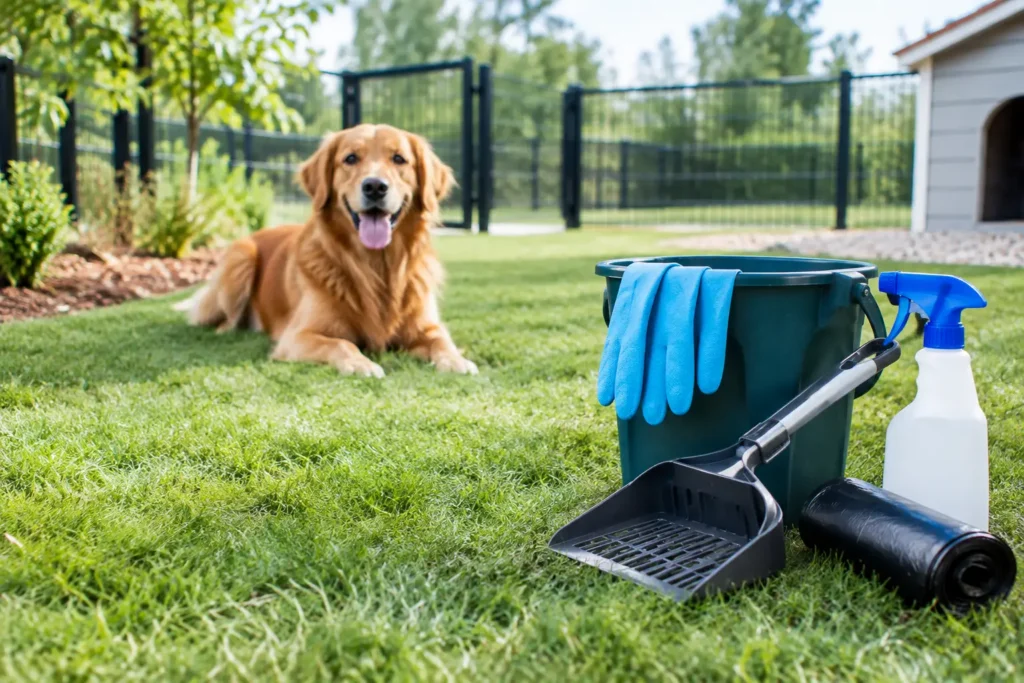
A dog run can look fine from the back door and still hold weeks of waste, odor, and germs close to the ground where paws, shoes, and kids play. This dog run sanitation guide gives homeowners a practical routine for keeping that space cleaner, safer, and more comfortable without turning every weekend into a cleanup project.
Start With Waste Removal, Not Disinfectant
The first rule of dog run sanitation is simple: disinfectant is not a substitute for scooping. Solid waste needs to be removed before you rinse, deodorize, or apply any cleaning product. If it is left behind, rain can spread contaminated material through gravel, grass, cracks in concrete, and the edges of the run.
For most households, scooping at least once a week is the minimum. A small run with multiple dogs, a puppy, or a dog with loose stool may need attention every day or every other day. The more often waste is removed, the less likely you are to deal with stubborn odor, flies, muddy paws, or a yard your family avoids using.
Use a dedicated scoop and rake or bagged pickup method, and keep those tools separate from garden tools. Place collected waste in a tightly sealed bag before putting it in your household trash. Double-bagging is a smart extra step, especially during warmer weather when odors build quickly.
Do not leave filled bags beside the dog run for later. A tied bag sitting in the sun can still smell, attract pests, and become an easy target for a curious dog. Make removal and disposal part of the same task.
Dog Run Sanitation Guide: Match the Method to the Surface
A dog run is not one-size-fits-all. The safest cleaning approach depends on whether your dog uses grass, gravel, artificial turf, concrete, or a mix of surfaces. Cleaning too aggressively can damage a lawn or leave residue that irritates paws.
Grass and natural soil
Grass is forgiving, but it also absorbs urine and can develop yellow spots, bare patches, and lingering smells. Pick up waste frequently, then use a regular garden hose to rinse the preferred potty area. This helps dilute urine, particularly in one spot where your dog routinely goes.
Avoid using harsh household cleaners on grass. Products containing bleach, ammonia, or strong fragrances can harm turf and may be unsafe for dogs that lick their paws or roll in the area. If the lawn has a persistent smell, a pet-safe outdoor enzymatic cleaner may help break down the organic material causing it. Follow the label exactly, and keep pets off the area for the stated drying time.
In the Black Hills, dry stretches can make urine odor more noticeable. A deeper rinse is useful, but avoid soaking the ground so much that you create mud or runoff. If one corner is taking all the wear, encourage rotation by moving toys, gates, or the path you use to let your dog out.
Gravel and pea rock
Gravel drains well and is a popular dog run surface, but it can trap small waste pieces and absorb urine odor over time. Scoop carefully with a rake designed for the size of the rock. A wide-tined rake can help lift waste without removing too much gravel.
Rinse the area periodically with a hose, focusing on the places your dog uses most. If odors persist even after regular cleanup, apply a pet-safe enzymatic product made for outdoor surfaces. Gravel may eventually need to be raked, topped off, or replaced in heavily used sections. That is not a failure of your routine. It is normal maintenance for a surface that gets daily use.
Concrete, pavers, and kennel pads
Hard surfaces are easier to see and scoop, but they need rinsing because urine, residue, and bacteria can remain in porous areas and seams. Remove solid waste first, rinse with water, then use a pet-safe disinfectant or enzyme cleaner suitable for concrete.
Do not mix cleaning products. Bleach and ammonia-based products can create dangerous fumes, and strong chemicals may be tough on paws. If you use a disinfectant, allow the required contact time on the surface, then rinse if the product directions call for it. Your dog should stay out of the run until the surface is dry and safe according to the label.
Pay extra attention to drainage. Standing water around a kennel pad or along a fence line can hold odor and create slick, unpleasant conditions. A clean dog run should drain away from the house and avoid pooling near doors, patios, or play areas.
Artificial turf
Artificial turf can be neat-looking, but it requires a consistent routine. Pick up solids promptly, rinse urine spots often, and brush the fibers occasionally so debris does not settle deep into the turf. Odor usually comes from the backing or infill, not the visible surface.
Use a cleaner specifically approved for pet turf. Some products are designed to neutralize odors, while others only add fragrance. Fragrance may temporarily mask a problem, but it will not remove the organic buildup causing it. If urine odor returns quickly after cleaning, the infill may need more thorough treatment or professional service.
Build a Routine You Can Actually Keep
A perfect sanitation plan is not helpful if it only happens once a month. The best routine is the one that fits your household, dog count, and yard setup.
A weekly schedule works well for many one- or two-dog homes. Scoop the run, inspect for hidden waste along fence lines, rinse the main potty area, and check the gate, water bowl, and surrounding surfaces. Once a month, do a closer inspection for worn grass, compacted gravel, drainage issues, and odor that returns after rinsing.
Families with several dogs, limited mobility, long workdays, or a small enclosed run may need more frequent service. There is no shame in that. Pet waste is a recurring chore, and it adds up fast when life gets busy. A scheduled cleanup service can keep the work from becoming an overdue, unpleasant project.
Black Hills Scoop Squad removes pet waste from residential yards, double-bags it, places it in the customer’s trash receptacle, and provides service notifications so homeowners know the job is done. Consistent removal gives every other sanitation step a better chance to work.
Control Odors Before They Take Over
A strong dog run odor is usually a maintenance signal, not a problem that needs more perfume. Start by checking for missed waste, especially near shrubs, corners, gates, and behind outdoor furniture. Then consider whether urine is collecting in a single patch, whether drainage is poor, or whether the surface needs a pet-safe enzymatic treatment.
Good airflow helps. If a run is enclosed on several sides, dampness and odor can linger longer. Keep leaves, grass clippings, and other organic debris out of the area, since they can hold moisture and make smells worse. Clean water bowls regularly too. A slimy bowl can become its own sanitation issue, even when the ground is clean.
For gravel and turf, avoid covering odors with heavily scented sprays. Dogs have sensitive noses, and some strong fragrances can make an area less comfortable for them. Neutralizing the source is more effective and more pet-friendly.
Protect Dogs, Kids, and Your Home
Sanitation is about more than appearance. Dog waste can carry parasites and bacteria, and paws can track residue from the run into the house. Encourage handwashing after cleanup, after outdoor play, and before meals. Keep children from playing in the designated potty area, even if it looks clean.
If your dog has diarrhea, visible worms, or a diagnosed intestinal parasite, scoop immediately and talk with your veterinarian about appropriate treatment and cleaning precautions. Routine yard cleaning supports a healthier environment, but it does not replace veterinary care.
It also helps to create a clear boundary between the dog run and family activity areas. Use fencing, a gate, or simple landscaping to direct your dog to one consistent bathroom space. This protects more of the yard and makes daily cleanup much faster.
A cleaner dog run does not require a complicated system. It requires timely waste removal, surface-appropriate cleaning, safe products, and a schedule that does not depend on finding extra time after a long day. Give the run a quick look the next time your dog heads outside. Small, consistent care keeps it ready for paws, play, and the people who share the yard.