A yard can look tidy from the patio and still hold a problem you cannot see. Dog parasite risks often start with waste left behind in grass, gravel, along fence lines, or near the spots where dogs like to play. For families who use their backyard every day, regular poop cleanup is about more than avoiding an unpleasant chore. It is one practical part of keeping outdoor spaces cleaner for dogs, kids, and guests.
Parasites are not a reason to panic. Most risks can be managed with consistent veterinary care, good handwashing habits, and prompt removal of pet waste. The trouble is that many parasite eggs and organisms are microscopic, and some can remain in the environment after the stool itself has broken down or been stepped on.
Why dog parasite risks can build up in a yard
An infected dog may not always look sick. Some dogs carry intestinal parasites with few obvious signs, especially early on. When they pass stool, parasite eggs, larvae, or other organisms may be shed into the yard. Another dog can encounter that contamination while sniffing, licking paws, eating grass, or investigating a favorite bathroom spot.
The risk depends on several factors: whether pets are on a veterinarian-recommended prevention plan, how quickly waste is removed, how many dogs use the property, and how often wildlife visits. A single stool pile does not automatically make a yard dangerous. But repeated waste accumulation gives contamination more opportunity to spread across the property through shoes, paws, rain runoff, lawn equipment, and curious noses.
Conditions around the Black Hills can add another layer. Spring thaw, wet grass, shaded areas, and puddles can create messy conditions that make it easier for waste to be tracked around. Dry or freezing weather may reduce the activity of some organisms, but it does not make old dog waste something to ignore. Picking up consistently is the simplest way to reduce what is left behind.
The parasites and germs homeowners hear about most
Not every health concern connected to dog waste works the same way. Some parasites are spread through eggs in feces, while others involve soil, moisture, or infected animals. Your veterinarian is the right person to ask about your dog’s specific prevention plan, but it helps to understand why cleanup matters.
Roundworms
Roundworm eggs can be shed in dog feces and may persist in soil for a long time under the right conditions. Dogs can be exposed by sniffing or ingesting contaminated soil or material. Children deserve extra attention here because they may play close to the ground and are more likely to put hands or objects near their mouths.
Hookworms
Hookworm larvae can develop in contaminated soil when conditions are warm and moist. Dogs may become infected through contact with contaminated ground or by ingesting larvae. Because lawns, garden beds, and damp shady areas can all become favorite places for dogs to explore, prompt pickup helps limit the source material before it has a chance to sit.
Whipworms and other intestinal parasites
Whipworm eggs are another reason routine fecal testing and poop pickup go together. These parasites can be difficult to spot without a veterinarian’s testing, and their eggs may be hardy in the environment. Giardia, a microscopic parasite, is also commonly discussed by pet owners because it can spread through contaminated feces and water. It is one reason standing water and shared water bowls deserve attention, especially in multi-dog homes.
Fleas, ticks, and wildlife exposure
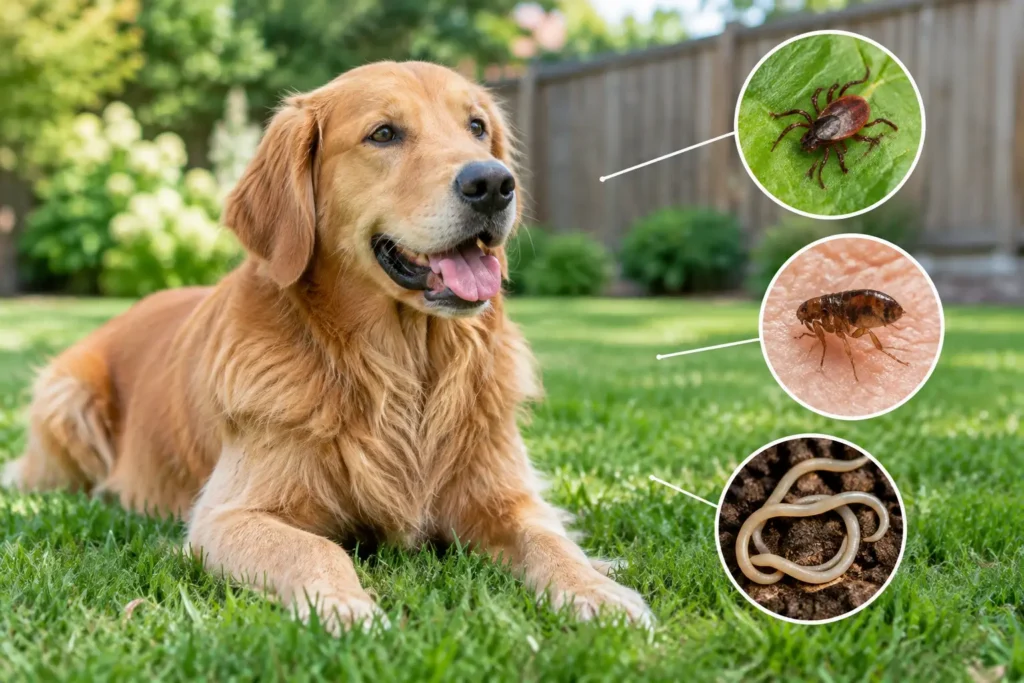
Fleas and ticks are not primarily spread by dog poop, but a poorly maintained yard can make it harder to notice other pet-health issues. Wildlife such as raccoons, foxes, rodents, and stray animals can also leave waste behind. Keep dogs from investigating unfamiliar droppings, secure trash, and talk with your veterinarian about prevention that fits your dog’s lifestyle.
What makes a backyard higher risk?
A busy household with two or three dogs will naturally have more cleanup needs than a home with one senior dog that only uses a small section of the yard. High risk does not mean unsafe. It means the household needs a dependable routine.
Yards tend to need more attention when waste is left for days or weeks, dogs share tight play areas, young children play in the grass, or pets frequently visit dog parks, boarding facilities, trails, and daycare. Homes with puppies also deserve special care. Puppies are more likely to have intestinal parasites and may require more frequent veterinary testing and treatment than adult dogs.
The least obvious problem areas are often under decks, behind sheds, along the back fence, and beneath deep snow. Those are easy places for waste to disappear until spring. A routine that covers the entire property, rather than only the most visible part of the lawn, makes a meaningful difference.
A realistic prevention routine for busy households
You do not need to turn your yard into a laboratory to reduce parasite exposure. Consistency beats occasional deep cleaning. Pick up dog waste as soon as practical, particularly after rain or when the yard has been heavily used. If daily scooping is not realistic, set a schedule that keeps waste from building up.
After handling pet waste, wash hands with soap and water. Teach children to do the same after outdoor play and before eating. Shoes that have crossed a known bathroom area should stay out of living spaces when possible, and dog paws may need a quick wipe after muddy yard time.
Keep water bowls clean and refill them with fresh water rather than allowing dogs to drink from puddles. Cover sandboxes when they are not in use, discourage dogs from using garden beds as bathrooms, and promptly remove wildlife droppings when it is safe to do so. These small habits help reduce the chances of contamination traveling from the yard to the home.
Veterinary care is the other half of the plan. Ask your veterinarian how often your dog should have a fecal test and which parasite prevention products make sense for your area, your dog’s age, and its daily routine. A dog that hikes, visits dog parks, hunts, or shares space with multiple pets may have different needs than a dog that mostly stays home.
When professional yard cleanup makes sense
For many homeowners, the challenge is not knowing what to do. It is keeping up with it during long workweeks, winter weather, travel, limited mobility, or a full household schedule. Letting waste pile up because life got busy is understandable, but it gives contamination more time to spread and makes the eventual cleanup less pleasant.
A recurring pet waste removal service provides a predictable reset for the yard. At Black Hills Scoop Squad, technicians remove the waste, double-bag it, place it in the customer’s trash receptacle, and send service updates so homeowners know the job was completed. That regular schedule can be especially helpful for multi-dog homes and families who want their lawn ready for play without adding another chore to the weekend.
Professional cleanup does not replace veterinary prevention, handwashing, or common-sense supervision. It does remove one major source of environmental contamination before it can sit, break apart, and get carried through the yard. For many households, that is the difference between intending to keep up and actually keeping up.
What to do if you suspect a parasite problem
If your dog has diarrhea, vomiting, weight loss, a bloated appearance, scooting, changes in appetite, or visible worms in stool, contact your veterinarian. Those signs can have many causes, so avoid trying to diagnose the issue based on internet photos or assumptions. Your veterinarian may recommend a fecal test and treatment tailored to the parasite involved.
In the meantime, pick up stool promptly, limit your dog’s contact with other dogs’ bathroom areas, and clean any soiled surfaces according to your veterinarian’s guidance. If a family member has symptoms you believe could be related to exposure, contact a healthcare professional. Simple precautions are useful, but professional advice is the right next step when illness is involved.
A cleaner yard will not solve every pet-health concern, but it gives parasites fewer chances to linger where your family and dogs spend their time. A dependable cleanup routine, paired with regular veterinary care, lets you enjoy the backyard for what it should be: a place for fetch, fresh air, and fewer unpleasant surprises.