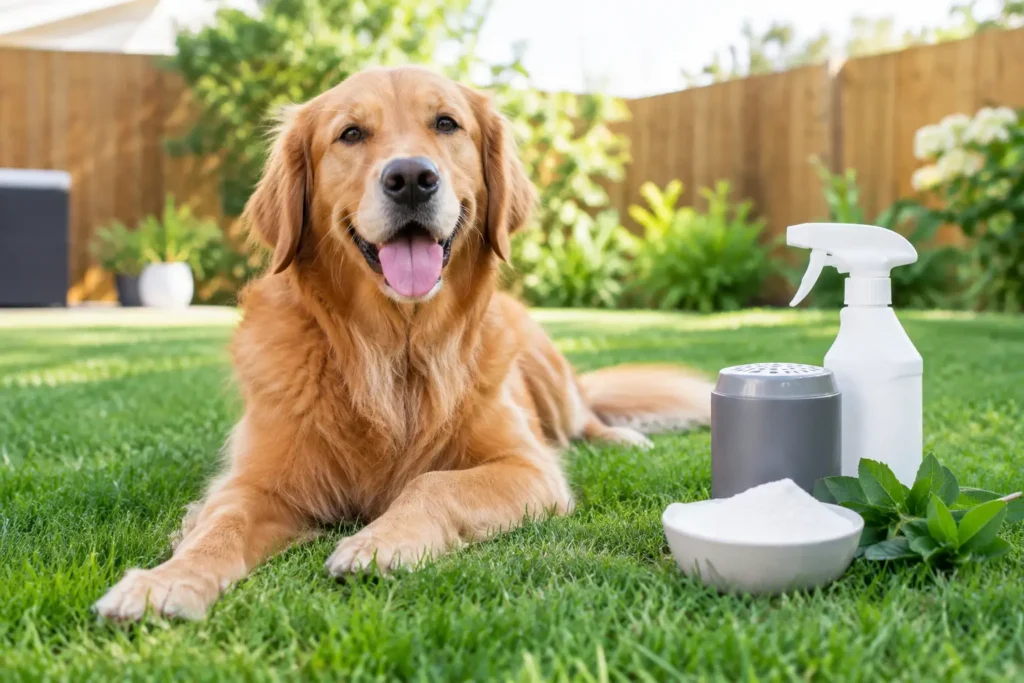
A yard can look clean from the patio and still smell like a dog run the moment the sun comes out. For Black Hills households with one dog or several, finding the best dog yard odor eliminators starts with understanding what is causing the smell. Usually, it is not one bad spot. It is a combination of urine buildup, leftover waste, wet grass, warm weather, and surfaces that hold odor longer than you expect.
A good odor eliminator does more than cover the problem with fragrance. It breaks down the source of the smell, works safely around pets when used as directed, and fits the kind of yard you have. The right choice for a grassy backyard may not be the right choice for a gravel run, artificial turf, concrete patio, or kennel area.
What Makes a Dog Yard Smell?
Dog urine contains concentrated minerals and waste compounds. When it dries, those compounds can remain in grass, soil, rock, turf fibers, and porous concrete. Add a little moisture from rain, sprinklers, or morning dew, and the odor can return quickly.
Pet waste is another major factor. Even small amounts left behind add bacteria and odor to the yard, especially when temperatures rise. This is why deodorizing works best as part of a regular cleanup routine, not as a replacement for one.
Poor drainage can make the issue worse. If water settles near a fence line, under a deck, beside a doghouse, or in a favorite potty corner, odor-causing material stays concentrated there. Before buying a product, walk the yard after watering or rain. You may find that the smelliest area is also the area that never fully dries.
The Best Dog Yard Odor Eliminators for Different Surfaces
The best product depends on where your dog goes and how strongly odor has built up. Here are the most practical options for common yard situations.
Enzyme cleaners for grass, soil, and organic buildup
Enzyme-based cleaners are often the best starting point for natural grass and soil. Rather than simply masking odor, they use biological ingredients to break down the organic matter behind it. They are especially useful around favorite potty spots, kennel areas, and places where old waste odor lingers after cleanup.
Look for a pet-specific outdoor enzyme cleaner that is labeled for lawns and safe for use around animals when directions are followed. Most are mixed in a hose-end sprayer or applied with a pump sprayer. Thorough coverage matters. A light mist on top of dry grass rarely reaches the urine that has settled into the soil below.
Enzyme cleaners can take time to work, and they may need repeated applications if the area has been used for months or years. They are not a one-and-done fix, but they are a sensible choice for families who want to treat the source without harsh chemicals.
Oxygen-based cleaners for hard surfaces
Concrete, pavers, patios, decks, and kennel floors can trap odor in tiny pores and surface cracks. Oxygen-based cleaners can help lift organic residue from these areas without relying on heavy fragrance. They are useful for urine spots, muddy paw traffic, and the general buildup that develops around outdoor pet spaces.
Follow the product directions carefully, especially regarding dilution and contact time. Scrubbing may be necessary on rough concrete or older surfaces. Rinse well afterward, and keep dogs off the treated area until it is dry if the label recommends it.
Be realistic about deeply stained concrete. A cleaner can reduce odor significantly, but a long-neglected kennel pad may need several treatments. In some cases, sealing the concrete after a thorough cleaning helps prevent future odor from soaking in.
Turf deodorizer for artificial grass
Artificial turf needs a different approach because urine does not soak into soil and disperse naturally. It can remain in the backing, infill, and drainage layer. A turf-safe enzyme deodorizer is usually the better choice because it is designed to move through the fibers and address odor below the surface.
Rinse turf regularly, then apply the deodorizer to the areas your dog uses most. Brushing the fibers occasionally can also help the product reach deeper into the turf. If odor returns quickly after treatment, check the drainage. A deodorizer cannot fully solve a base layer that is holding standing water or compacted debris.
Odor-neutralizing granules for gravel and dog runs
Gravel yards and dog runs are easy to scoop but can hold a surprising amount of urine odor. Pet-safe deodorizing granules or powdered treatments can be helpful here, particularly in dry areas where rainfall does not rinse the surface often.
Choose a product made for pet areas, not a general outdoor deodorizer. Apply it evenly and according to the label. In many cases, a rinse with a hose after application helps the treatment work its way between the rocks. If a gravel area still smells strong, it may be time to remove and replace the most affected material near the usual potty zone.
What to Avoid When Treating Yard Odor
A stronger chemical smell does not mean a cleaner yard. Some common household products can create new problems for pets, plants, and surfaces.
Avoid using bleach in areas where dogs walk, sniff, or relieve themselves. It can irritate paws and airways, harm grass, and react dangerously if mixed with other cleaners. Ammonia is another poor choice. Its smell can resemble urine and may encourage some dogs to mark the same area again.
Be cautious with heavily perfumed sprays, too. They may provide a short-lived improvement, but fragrance does not remove urine residue or old waste. Products not specifically labeled for pet areas can also damage lawns or leave behind ingredients you would rather not have near children and animals.
Vinegar has a reputation as a natural cleaner, but it is not always the answer outdoors. It may help on some hard surfaces when properly diluted, yet repeated use can damage grass and affect soil. It also does little for heavy, established odor compared with a quality enzyme treatment.
The Cleanup Step That Makes Deodorizers Work Better
No odor eliminator performs at its best over a yard full of dog waste. Regular scooping removes one of the main sources of bacteria and odor before it breaks down into the lawn, gravel, or mud.
For most households, weekly cleanup is a good baseline. Families with multiple dogs, small yards, or dogs that use one concentrated area may need more frequent removal. Quick spot cleanup between scheduled visits also helps after rain, when waste softens and odor spreads more easily.
This is where a recurring service can make a noticeable difference. Black Hills Scoop Squad removes waste from your yard, double-bags it, and places it in your trash receptacle, helping keep the odor problem from rebuilding between deodorizing treatments. A cleaner yard also means your chosen product can focus on urine and surface residue instead of trying to overcome weeks of accumulated waste.
How to Keep a Yard Fresher Between Treatments
The most effective routine is simple: remove waste consistently, rinse high-use potty areas when weather allows, and use a pet-safe enzyme treatment as needed. During hot, dry stretches, a deeper rinse can help dilute urine in grass and gravel. During wet weather, pay closer attention to drainage and pick up waste promptly.
If possible, encourage your dog to use one section of the yard. It will not eliminate odor, but it makes cleanup and treatment far more manageable. A designated potty area with gravel, turf, or an easy-to-rinse surface can be especially helpful for busy families and homeowners who want to preserve the rest of the lawn.
For yards with stubborn odor, treat the problem in layers. Scoop first, rinse the affected area, apply the correct odor eliminator for the surface, and repeat as directed. Give enzyme products time to work before switching products. Constantly mixing cleaners is not safer or more effective.
When Yard Odor Signals a Bigger Problem
If the yard smells unusually strong even after cleanup and treatment, look for issues beyond routine urine odor. Standing water, a broken sprinkler head, clogged drainage, old pet waste under shrubs, or urine-soaked mulch can all keep the problem going. A dog repeatedly urinating in one spot near the house can also create odor around foundations, patios, and fences.
A strong ammonia-like smell inside or immediately around a kennel area may call for a more thorough wash and disinfecting process. If your dog’s urine suddenly smells much stronger than usual, or your dog is straining, urinating frequently, or seems uncomfortable, contact your veterinarian. Yard products cannot address a possible health concern.
A fresh yard is less about finding one miracle bottle and more about building a routine that stays ahead of the mess. Choose a pet-safe product that matches your surface, remove waste on a dependable schedule, and give the areas your dog uses most a little extra attention before odor has a chance to settle in.