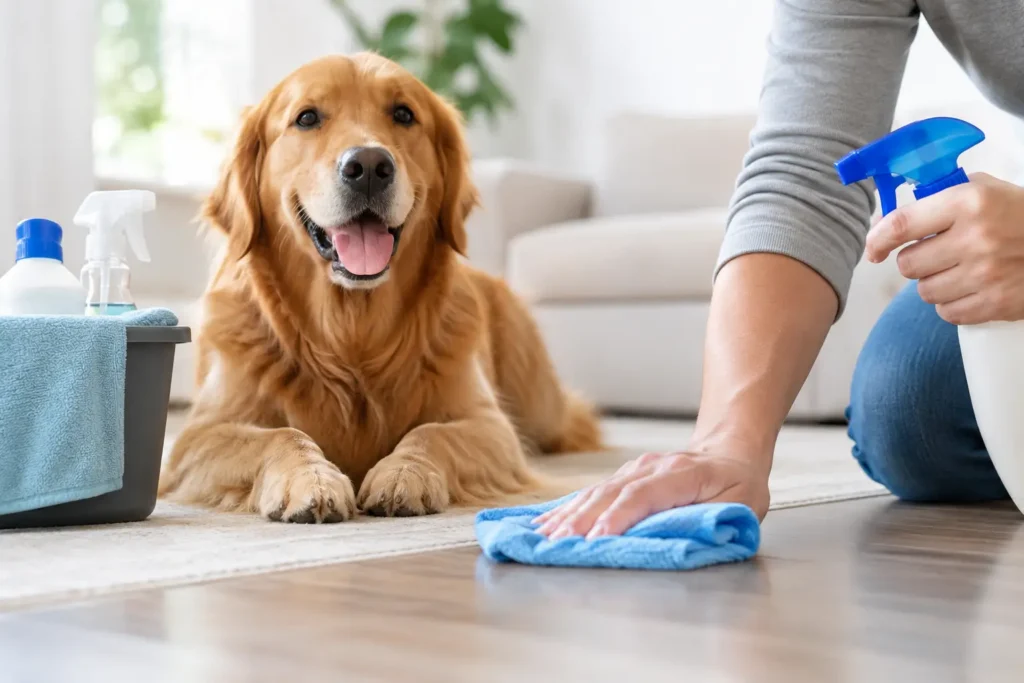
A freshly cleaned floor or patio should not come with a worry that your dog will walk through chemicals, lick a paw, and get sick. So, are disinfectants safe for dogs? They can be when they are chosen carefully, mixed correctly, and kept away from pets until the treated area is fully dry. The product, the surface, your dog’s habits, and how you use it all matter.
For most households, the goal is not to disinfect every inch of the home or yard. It is to clean up pet waste promptly, use disinfectants only where they make sense, and prevent unnecessary exposure. That approach keeps your property cleaner without creating a new safety problem for the dog who lives there.
What Makes a Disinfectant Risky for Dogs?
A disinfectant is made to kill or reduce germs on a surface. That is different from a general cleaner, which removes dirt, grime, and organic material. Because disinfectants contain active ingredients designed to work against microorganisms, they need to be handled with more care than everyday soap and water.
Dogs are most likely to be exposed in three ways: by walking on a wet treated surface, licking a spill or residue, or breathing concentrated fumes in a poorly ventilated space. A dog that licks its paws, chews toys, or spends time in a kennel can have more opportunities for exposure than a dog that mostly stays away from the cleaned area.
The amount of product matters, too. A correctly diluted solution used on a hard surface is very different from an undiluted concentrate spilled on a garage floor. Even products marketed as pet-friendly should be used according to their label directions. “Pet-safe” does not mean safe to drink, lick, or apply directly to your dog.
Are Disinfectants Safe for Dogs After They Dry?
In many cases, yes. Following the label’s dilution, contact time, ventilation, and drying instructions is the best way to reduce risk. Keep your dog out of the area while you clean and disinfect, then allow the surface to dry completely before letting them return.
Drying is especially important on floors, patios, kennel surfaces, and entryways where paws make direct contact. If the product leaves a visible residue, the label may call for rinsing after the required contact time. Do not assume rinsing is always necessary or always appropriate – follow the specific product instructions.
Open windows when cleaning indoors, and keep food bowls, water dishes, toys, bedding, and chew items away from the area. If you disinfect a dog crate or kennel, remove your dog first and wait until the space is dry and free of strong odor before using it again.
A strong chemical smell is a good reason to give the area more time and airflow. It is not a reliable measure of whether a product is working, but it can signal that the space is not yet comfortable for your pet.
Ingredients That Deserve Extra Care
You do not need to memorize every ingredient label, but it helps to recognize a few common categories. Bleach-based products can disinfect hard, nonporous surfaces when diluted properly. However, bleach can irritate a dog’s skin, eyes, and respiratory system if it is too concentrated, used in a closed space, or left wet where paws can track through it.
Quaternary ammonium compounds, sometimes called quats, are common in commercial disinfectants and wipes. They can be useful for their intended purpose, but concentrated products and wet residue may irritate skin or cause illness if licked. Keep dogs away during use and until surfaces are dry.
Hydrogen peroxide-based disinfectants may be a practical option for some surfaces, but concentration still matters. A household product and a professional-grade concentrate are not interchangeable. Never use a disinfectant simply because one ingredient sounds mild.
Avoid products containing phenols around pets whenever possible. These are found in some heavy-duty disinfectants and can be harmful if inhaled, swallowed, or absorbed through the skin. Products heavily scented with essential oils also deserve caution. Natural fragrance is not automatically dog-safe, especially when oils are concentrated.
Whatever you use, never mix cleaning products. Bleach combined with ammonia, acids, or certain other cleaners can release dangerous gases. Mixing products does not make a surface cleaner – it can make the air unsafe for everyone in the home.
A Clean Yard Needs More Than Spray
Dog waste is one of the biggest sanitation issues in a yard, particularly when it sits for days or weeks. It can carry bacteria, parasites, and other contaminants that no homeowner wants near kids, shoes, or playful dogs. But disinfecting the entire lawn is not the answer.
Grass, soil, gravel, and mulch are porous outdoor surfaces. Spraying them with disinfectant rarely provides reliable sanitation, may damage plants, and can create runoff concerns. Some parasite eggs are also difficult to eliminate with standard household disinfectants. The most effective first step is simple: remove dog waste consistently before it gets trampled, washed into low spots, or spread around the property.
Use disinfectant selectively on hard, nonporous areas such as concrete kennel pads, patio spots, or outdoor surfaces that have been visibly soiled. First remove the waste and clean the surface. Disinfectants work best on a surface that is already free of dirt and organic material.
For a busy household, regular yard cleanup does more for day-to-day sanitation than occasional heavy spraying. It also means your dog has a cleaner place to play, and you are less likely to track unpleasant surprises back into the house.
A Safer Cleaning Routine Around Dogs
The best routine is straightforward: pick up waste, clean the affected surface, disinfect only when it is appropriate, and give the product enough time to work before it dries or is rinsed as directed. Keep your dog separated from the area from start to finish.
Pay attention to the label’s listed surfaces. A product intended for sealed tile may not be suitable for unfinished wood, natural stone, turf, or grass. Using too much product is not safer, either. Overconcentrating a disinfectant can leave more residue while increasing the risk of irritation.
Store all concentrates, wipes, and spray bottles where dogs cannot reach them. A closed cabinet is better than a low shelf in the garage or laundry room. Do not leave buckets of cleaning solution unattended, even for a few minutes. Curious dogs can drink from them quickly.
If your dog walks through a wet product, rinse the paws with clean water. If they lick or swallow a disinfectant, develop vomiting, coughing, drooling, eye irritation, trouble breathing, or unusual lethargy, call your veterinarian or a pet poison resource right away. Have the product container available so you can share the active ingredients and directions.
When Professional Yard Service Helps
A cleaner yard starts with dependable removal, not harsh chemicals. That is why a scheduled pet waste service can be a practical part of a healthier outdoor routine. Instead of letting piles accumulate between busy workdays, travel, weather, and family plans, the waste is removed on a predictable schedule.
Black Hills Scoop Squad uses professional handling practices, double-bags collected waste, and provides clear service communication so homeowners know their property has been cared for. For families who want a more usable yard without adding another unpleasant chore to the week, that consistency can make a real difference.
Disinfectants have a place in dog-owning homes, but they work best as a targeted tool, not a substitute for regular cleanup. Give your dog clean, dry places to walk and play, and save the stronger products for the surfaces and situations that truly call for them.